Jimmy Connor
Founder & Managing Partner | Bloor Street Capital | Uranium-focused mining interviewer and host
"Multi-day Virtual Uranium Conferences and long-form CEO interviews on the Bloor Street Capital YouTube channel."
Biography
Jimmy Connor is the founder and Managing Partner of Bloor Street Capital, a Toronto-based financial media and capital-markets advisory firm that has become one of the most-watched channels for retail investors following the uranium and broader resource sectors. He is the principal host of the Bloor Street Capital YouTube channel and the "Growing and Protecting My Wealth" podcast, where he has built a library of nearly 500 long-form interviews with mining executives, fund managers, and commodity strategists.
Before launching Bloor Street Capital, Connor spent more than a decade in capital markets at multinational firms including CIBC, working in trading and institutional coverage. That institutional background shows in his interview style: he presses guests on production guidance, offtake terms, balance-sheet runway, and the small print of regulatory filings rather than chasing promotional narratives, and the resulting catalog is regularly used by self-directed resource investors as primary research on individual companies and on commodity-cycle calls.
Connor is best known in commodity circles for his deep focus on the uranium thesis. He hosts the recurring Bloor Street Capital Virtual Uranium Conference, a multi-day event that has run at least four editions and has featured leadership from Kazatomprom, Cameco, enCore Energy, Denison Mines, UEC, Ur-Energy, Premier American Uranium, Verdera Energy, and Sprott Asset Management. The conferences have been promoted by the World Nuclear Association and have become a regular fixture in the uranium calendar alongside his one-off CEO interviews.
For a resource investor, the value of following Connor is a steady, executive-level view of the uranium supply-demand picture, layered with adjacent coverage of gold, silver, copper, lithium, and critical minerals. His interviews emphasize what management is actually doing — drilling, permitting, financing, and building offtake — over the macro narrative of the week, which is why both juniors and majors keep coming back to his channel.
Videos (69)
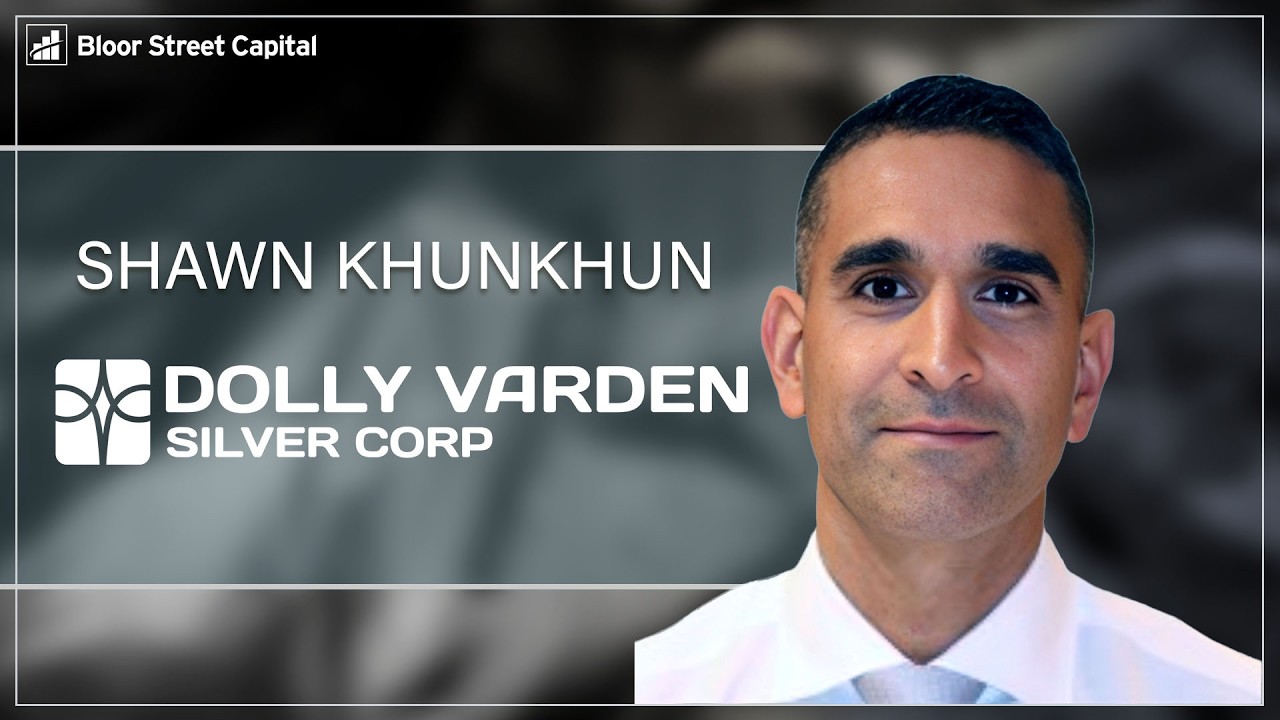
Dolly Varden Silver | Shawn Khunkhun and Jimmy Connor
- Top takeaway Opens by noting the gold-to-silver ratio has compressed from about 100 at their last conversation in May to roughly 60, and says he would not be surprised to see it at 30 or 25 by their next conversation.
- Structures the interview around the proposed Dolly Varden-Contango merger, pressing on the deal rationale, the Alaska and Kitsault Valley assets, the post-close balance sheet, and upcoming news flow.
Dolly Varden's proposed merger with gold producer Contango ORE pairs Alaska gold cash flow with a rare high-grade primary silver developer. Contango's direct shipping ore model — trucking high-grade rock to existing mills like Kinross's Fort Knox — avoids new processing plants and tailings permitting. Management expects about $140 million in cash and roughly $150 million of annual free cash flow at closing, fully funding both drill programs. Grade anchors the thesis: the Mancho open pit runs 8 g/t (grams per tonne) gold, and Dolly Varden's Wolf vein averages about 300 g/t silver. Shareholders vote on the deal on March 17, with closing expected by end of March and Lucky Shot drill results due next.

Aya Gold and Silver | Benoit La Salle and Jimmy Connor
- Top takeaway The host frames 2025 as a pivotal year for Aya, citing record production of about 5M silver-equivalent ounces, and steers the interview toward the 2026 optimization and exploration plans.
- He presses for detail on the 200,000 m Boumadine drill program and asks La Salle to lay out the coming months' news flow for investors.
Aya Gold & Silver guides 2026 production to 6.2–6.8 million silver-equivalent ounces (silver plus gold counted as silver), up from 5 million in 2025. Aya's new Morocco plant runs 30% above its nameplate capacity, underpinning an 11-year, 6-million-ounce mine plan at about $19 AISC (all-in sustaining cost). Historic residues at its second asset ship at $3–4 million monthly profit and $11 AISC, with 180,000 metres of drilling feeding a June resource update. With over $100 million in the bank and no hedges, Aya simply declines to sell below $95 — treasury strength replaces hedging during price swings. The guest expects tightening silver supply against growing industrial and financial demand, calling the ride bumpy but positioning producers holding physical metal well.
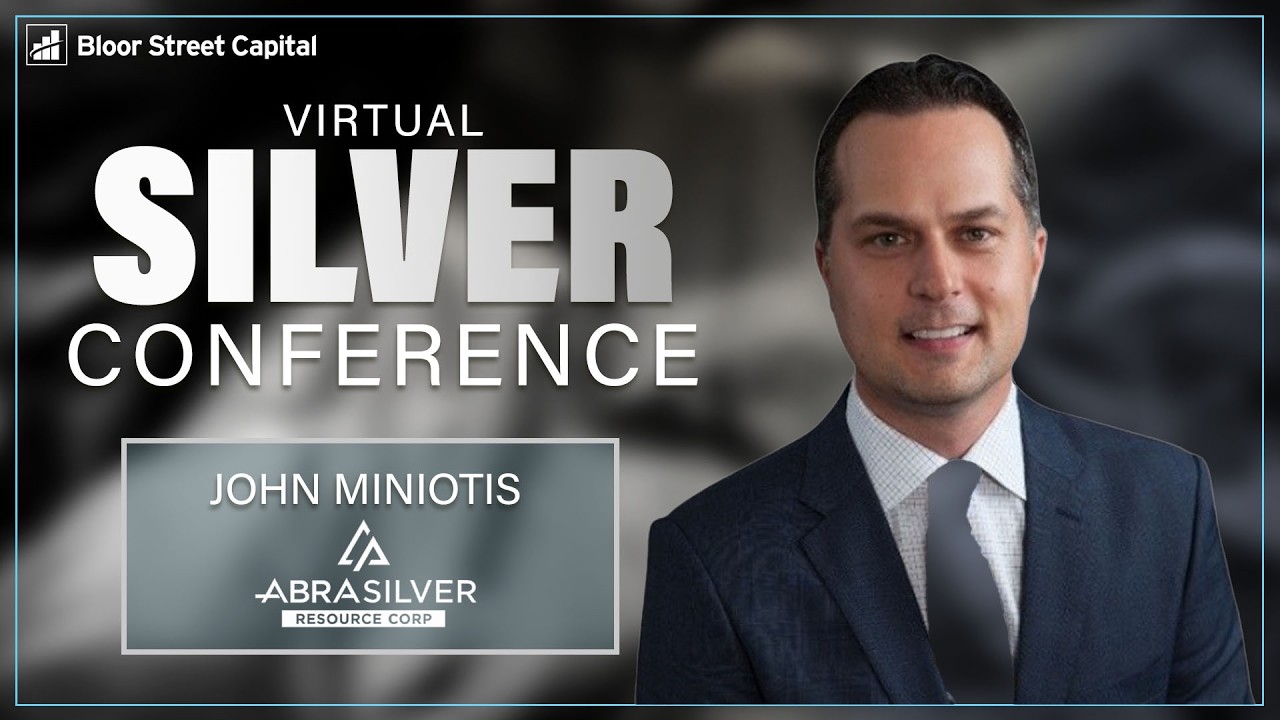
Abra Silver 350 Million Silver Eq Ozs. and Growing | John Miniotis and Jimmy Connor
- Top takeaway Hosting the interview, Jimmy Connor notes AbraSilver made a lot of progress over the past year, with the stock up over 300%, and calls inclusion in Argentina's RIGI program one of the big drivers for the company in 2026.
- He points to the shallow, high-grade Jack deposit as a boost to early mine economics and steers the discussion to investor-focused specifics: pre-feasibility numbers, the $540 million capex, funding options, Phase 6 drilling, and the timeline to first production.
AbraSilver's Diablillos resource reached 350 million silver-equivalent ounces after a 100 million ounce measured-and-indicated addition in one year of drilling. Argentina's RIGI incentive regime — 30 years of tax and legal stability — cuts AbraSilver's tax rate, removes import and export duties, and ends foreign-exchange controls. The guest expects RIGI approval, environmental permits, and a definitive feasibility study within months, setting up a construction decision before end-2026. Pre-feasibility economics assumed $25 silver and $2,000 gold; the guest says consensus prices imply after-tax returns above 50% and payback under one year. Construction needs roughly $540 million; the guest cites debt, convertibles, or a stream as options, with first production targeted for 2029.

Wheaton Precious Metals: World's 5th Largest Silver Producer | Randy Smallwood and Jimmy Connor
- Top takeaway As host, Jimmy Connor steers the interview into jurisdictional risk, pressing for the Pascua Lama permit-loss story and for lessons from bad deals before the successes.
- He frames Canada's shrinking roster of resource champions, noting INCO, Alcan and most recently Teck were taken over by foreign buyers, and closes by asking about Wheaton's Future of Mining Challenge.
Streaming separates mine investors from cost risk: the upfront payment and per-ounce production payment are fixed, capped at spot price. Pascua Llama taught the streamer to demand parent guarantees, asset security, and open-ended compensation — and to refuse streaming political risk. Most silver is a byproduct of lead-zinc mining, and with no new lead-zinc mines being built, supply stays structurally constrained. The guest argues silver can reclaim its historical 30-to-40 gold ratio (how many silver ounces one gold ounce buys). Gold streams now dominate new deals because miners see streaming as their cheapest capital, lifting Wheaton toward a million gold-equivalent ounces.

Free Virtual Silver Conference Replay
- Top takeaway Hosts the virtual silver conference for Bloor Street Capital, interviewing Sprott, AbraSilver, Aya, Dolly Varden-Contango, Skeena, Wheaton and Silver Institute guests.
- Reveals he has been long gold for two years with little silver exposure, views the recent pullback as a possible buying opportunity, and notes the gold-silver ratio compressing from about 100 last May to roughly 60.
Silver's five-year supply deficit and rising industrial demand anchor the bull case speakers make despite a 30% one-day price crash. Sprott managers call the selloff a buying opportunity: average in slowly, judge explorers on deposit size, producers on cash flow. Dolly Varden's merger with Contango pairs high-grade BC silver with an Alaska gold miner's cash flow and permitting expertise. AbraSilver and Aya are advancing toward bigger resources and record output, while Skeena is fully permitted and targets 2027 cash flow. Washington's critical-minerals push, including the $12 billion Project Vault reserve fund, and cheap grid power are reshaping mining economics.

Michael Oliver on What to Do Now with Gold, Silver, Oil, Uranium | Michael Oliver and Jimmy Connor
- Top takeaway Connor says he has been long gold for two years but had little silver exposure after missing the run, and he frames the interview around whether the crash is his buying opportunity.
- He is long some oil-related ETFs and sees WTI as constructive despite the bearish news flow.
- He argues bitcoin looks like it is breaking down badly, down about 50% from its October high and wanting to go lower, and he presses on whether $60,000 will hold.
- He plays devil's advocate on silver, noting the 30% one-day drop was the biggest since 1980, when silver fell 63% in one day and went on to lose about 70% of its value, and says silver's volatility concerns him.
Oliver argues silver's 30% one-day plunge broke sentiment, not momentum structure — trend markers on long-term momentum charts — and calls the pullback a buying opportunity. He reiterates a $3,500 silver target by summer, citing markets like copper that abruptly repriced after ending decades-long trading ranges. Silver near 2% of gold's price versus over 3% in 2011 and 6.5% in 1980 underpins his call for silver to outperform gold. Bitcoin's breakdown validated Oliver's sell triggers; he now calls it a busted bubble whose unwinding could hit companies with no obvious crypto ties. A momentum breakout above $63 suggests crude oil can reach the mid-$90s; Oliver favors commodity-related stocks, miners included, for multi-year positions.

Osisko Development Update | Sean Roosen and Jimmy Connor
- Top takeaway As host, he steers the interview through Caribou's feasibility, infrastructure and power setup, resource conversion potential and valuation against peers such as Wesdome, G Mining, Lundin and Alamos.
- Presses Roosen on when a takeover bid might come, noting the deposit remains open at depth and along strike, and closes by asking what news flow investors should expect in coming months.
Osisko Development is fully permitted and fully funded, building a 5,000-ton-per-day underground mine at Caribou targeting 220,000 ounces of gold a year. The optimized feasibility study outlines a 10-year mine life with AISC (all-in sustaining cost — the full cost per ounce) of $1,157. Roosen argues $4,600 gold could add 1.5 to 3 million ounces by lowering the cut-off grade, the minimum grade worth mining. He calls the stock cheap versus peers, citing about $700 million enterprise value net of cash against producers valued in billions per 100,000 ounces. Roosen assumes Osisko Development is in play daily and fears a takeover could arrive before drilling finishes the district's resource.

Kinross Gold Update | Andrea Freeborough and Jimmy Connor
- Top takeaway He structures the interview as a project-by-project breakdown of Kinross's three newly approved US builds, pressing Freeborough for capex, NPV, IRR, and production profiles on each before turning to the producing mines.
- He closes by asking Freeborough to preview coming news flow — project updates, Great Bear and Lobo Marte, and the February year-end results and 2026 guidance.
Kinross approved three US projects adding about 3 million ounces — up to 400,000 ounces annually from 2028 — extending Nevada mine lives into the 2030s. Economics assume $4,300 gold: combined AISC (All-In Sustaining Cost — what it really costs to produce an ounce) of $1,650 and $4.1 billion NPV. Reusing existing mills and infrastructure keeps build costs low — $400 million Phase X, $485 million Curlew, $490 million Redbird 2 — with payback under two years. Great Bear in Ontario and Lobo Marte in Chile lead the pipeline; Great Bear targets 500,000 ounces a year at $800 AISC from late 2029. Kinross expects $1 billion net cash at year-end 2025, lifted its dividend 17%, completed its $600 million buyback, and guided 2026 capex to $1.5 billion.

Hemlo Mining Update | Jason Kosec and Jimmy Connor
- Top takeaway The host frames the episode around the thesis that Barrick undercapitalized Hemlo — harvesting cash flow without reinvesting — teeing up the new team's optimization plans.
- He raises Hemlo's valuation discount to comparable companies and drives the deep-dive on deal terms, costs, drilling plans, and upcoming catalysts such as the TSX main board listing and March index rebalancing.
Hemlo Mining, Canada's newest gold producer, bought the long-producing Hemlo mine from Barrick for $925 million and sees upside from past underinvestment. A roughly $40 million exploration budget and 130 kilometers of drilling aim to extend a 14-year mine life beyond 20 years. Idle hoisting and mill capacity let management target 6,000 tonnes per day and 200,000 annual ounces by end-2027 with modest capital. All-in sustaining costs (AISC — the full cost to produce an ounce) run about $1,400 per ounce, leaving high margins at current gold prices. Upcoming catalysts include a TSX main board listing, potential March index inclusion, an updated resource statement, and a 2027 NYSE American listing.
Key Works
Long-form interviews with mining executives and commodity strategists; nearly 500 videos focused on uranium, gold, silver, copper, and critical minerals.
Audio version of Bloor Street Capital interviews covering resource investing and wealth preservation.
Recurring multi-day virtual conference featuring leadership from Kazatomprom, Cameco, Denison Mines, enCore Energy, UEC, Ur-Energy, Sprott, and other uranium names; promoted by the World Nuclear Association.
Specializations
Disclaimer: Jimmy Connor has NOT endorsed this platform and is not affiliated with Pixys in any way.