Jimmy Connor
Founder & Managing Partner | Bloor Street Capital | Uranium-focused mining interviewer and host
"Multi-day Virtual Uranium Conferences and long-form CEO interviews on the Bloor Street Capital YouTube channel."
Biography
Jimmy Connor is the founder and Managing Partner of Bloor Street Capital, a Toronto-based financial media and capital-markets advisory firm that has become one of the most-watched channels for retail investors following the uranium and broader resource sectors. He is the principal host of the Bloor Street Capital YouTube channel and the "Growing and Protecting My Wealth" podcast, where he has built a library of nearly 500 long-form interviews with mining executives, fund managers, and commodity strategists.
Before launching Bloor Street Capital, Connor spent more than a decade in capital markets at multinational firms including CIBC, working in trading and institutional coverage. That institutional background shows in his interview style: he presses guests on production guidance, offtake terms, balance-sheet runway, and the small print of regulatory filings rather than chasing promotional narratives, and the resulting catalog is regularly used by self-directed resource investors as primary research on individual companies and on commodity-cycle calls.
Connor is best known in commodity circles for his deep focus on the uranium thesis. He hosts the recurring Bloor Street Capital Virtual Uranium Conference, a multi-day event that has run at least four editions and has featured leadership from Kazatomprom, Cameco, enCore Energy, Denison Mines, UEC, Ur-Energy, Premier American Uranium, Verdera Energy, and Sprott Asset Management. The conferences have been promoted by the World Nuclear Association and have become a regular fixture in the uranium calendar alongside his one-off CEO interviews.
For a resource investor, the value of following Connor is a steady, executive-level view of the uranium supply-demand picture, layered with adjacent coverage of gold, silver, copper, lithium, and critical minerals. His interviews emphasize what management is actually doing — drilling, permitting, financing, and building offtake — over the macro narrative of the week, which is why both juniors and majors keep coming back to his channel.
Videos (69)

The Millionaires You've Never Heard Of | Owen Zidar on How Americans Really Get Rich
- Top takeaway He is the interviewer who sets up the episode: he read Owen Zidar's The Everywhere Millionaire and opens on a Coral Gables auto-dealership family he says spent "$60 million on their daughter's wedding", to show that American wealth sits somewhere people do not expect.
- He frames the discussion as a contrast with his own market, telling viewers from his Toronto base that "I think a lot of Canadians, we're very conservative, okay?" and will not take the same kind of risk Americans will.
- He supplies the quote that carries the franchise section, citing Russell Westbrook on where he invests his money: "Unsexy is sexy to me."
- He largely stays out of the analytical role, asking the questions that open each block - whether owners go all in, the illicit-activity research, the pass-through tax system, and which US cities produce the most entrepreneurs - rather than asserting answers to them.
- He is explicit about the limits of his own claims, flagging that he has heard the failure-stigma argument only second hand and adding that "I don't know, I can't speak to Canada."
Zidar's thesis: America's wealth is built mostly by owners of ordinary businesses - dealerships, restaurants, convenience stores - not Silicon Valley founders. Zidar argues decades-long incremental compounding beats headline innovation; a hot dog stand, not a rocket company, built a billion-dollar brand. Zidar credits pass-through tax structures, made attractive after 1986 rate cuts, with roughly half of US business profits and employment. Failure does not disqualify US founders: half of startups are gone by year five, yet people who failed re-enter work and still out-earn peers. Where you are born still matters; Zidar says Salt Lake City births make someone three times likelier to run a top-decile business than Memphis births.
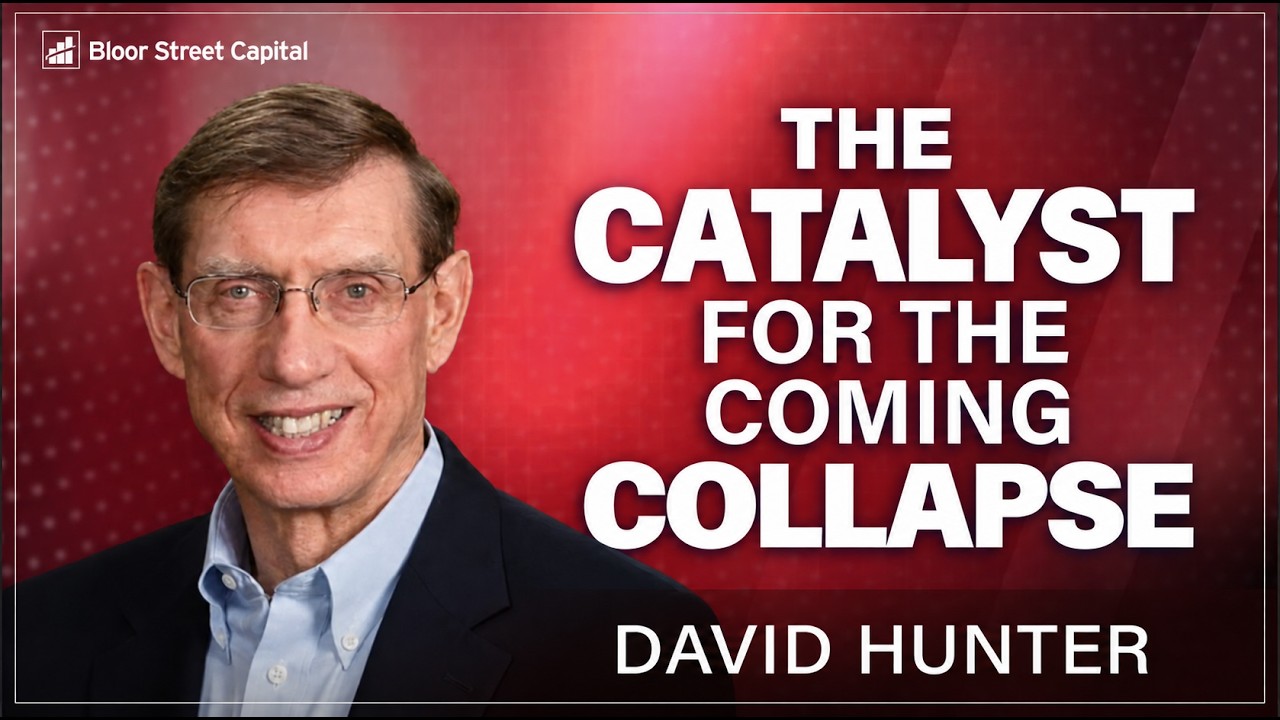
David Hunter on the S&P 500, Bonds, Gold & Oil | What Comes Next?
Contrarian David Hunter extends the secular bull call: S&P 500 at 10,000, NASDAQ 36,000, Dow 70,000, with institutions still not fully invested. Hunter warns record debt and derivatives leverage will end the cycle in a global bust that could drive the broad market down 80 percent. He expects bonds to rally as yields roll over but sees oil falling into the 70s and 60s, then the 30s in the bust. Hunter targets 200 silver and 7,000 gold within three to six months, arguing the metals correction shook out weak hands and lows are in. Politics, from the Iran war to the midterms, matters, but Hunter says markets rarely top because of elections.

Anthony Scaramucci on Canada and U.S. Relations
Scaramucci traces Trump's rise to three policy mistakes: China's WTO entry, deficit-funded wars, and a bank bailout that bypassed struggling households. He calls $40 trillion of US debt sustainable against roughly $240 trillion of national wealth, but urges restoring 1990s-style PAYGO budget discipline. Scaramucci gives Mark Carney top marks for confronting Trump with strength and predicts trade pressure will force a deal favorable to Canada. He expects Republicans to lose the House in November, narrowly hold the Senate, and capitulate in the Canada trade war to protect vulnerable seats. America still needs Chinese rare earths and components, and US firms that lent China their technology saw it copied, Scaramucci argues.

Laramide's Path to Uranium Production | Marc Henderson
- Top takeaway The host probes the Church Rock permitting sequence — the state discharge permit plus the NRC renewal — and the path to a production decision.
- He presses the CEO to characterize the confidential strategic investor behind the $5 million placement and later flags the sudden uranium price move and possible contract announcements after the WNA.
The CEO says Church Rock in New Mexico needs one state discharge permit to be shovel-ready at about one million pounds a year. ISR (in-situ recovery — uranium leached underground and pumped to surface) keeps startup capital near $50 million, per the guest. The guest cites a new Westmoreland study showing a billion-dollar NPV and a pathway to 100 million pounds of uranium. The guest expects Queensland's uranium mining ban to lift because it is a policy change, not legislation, with 2013 as precedent. Uranium term prices have risen five straight years to about $97 per pound, and the guest argues the real contracting cycle has not started.
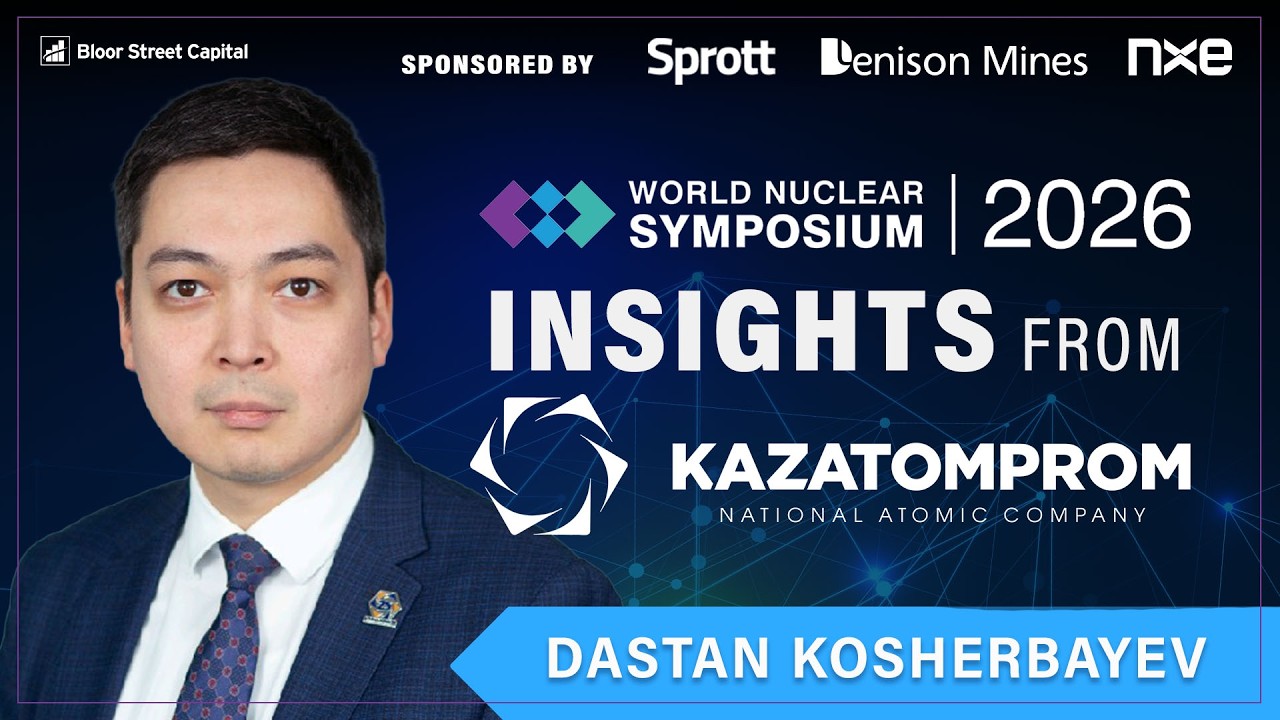
Kazatomprom: Uranium Production, Guidance & Sulphuric Acid Supply
- Top takeaway Frames the discussion around production guidance, sulfuric acid supply, and inventory as the key investor questions raised during the London meetings
- Closes by thanking the guest for 'promoting the industry', signalling an explicitly pro-nuclear stance and a bullish framing of the uranium renaissance narrative
Kazatomprom reaffirms 2026 uranium guidance of 27,500–29,000 tons and says no price would tempt it to grow output — value over volume remains the playbook. Kazakhstan's third sulphuric-acid plant is delayed at least six months past its Q1 2027 target after prehistoric fossil remains were found at the site. Sulphuric acid — a critical input for ISR (in-situ recovery) uranium mining — accounts for under 15% of Kazatomprom's production costs, giving it margin buffer. June finished uranium inventory of 21.4 million pounds, up roughly 20% year over year, is framed as seasonal delivery timing rather than a deliberate build. Management describes a coming 'nuclear renaissance' as governments convert nuclear ambitions into action and positions Kazatomprom as a primary beneficiary.

Investing in the Nuclear Reactor Supply Chain | Ben Finegold and Jimmy Connor
- Top takeaway Jimmy frames his top trade as a pivot beyond mining into the wider reactor supply chain, saying one of his recent mistakes was being "too focused on mining" when better-performing nuclear stocks sit in the supply chain.
- He uses Cameco (49% Westinghouse owner) as his proxy for the AP1000 build-out and notes the 91-reactor pipeline disclosed at Cameco's last conference call.
- He sees "relatively better value" in US and Canadian junior uranium explorers than in Cameco, even while owning Cameco himself, and expects a wave of consolidation.
- He is skeptical that the West can match China's sub-$6B reactor build cost, citing regulation, the absence of NIMBYism in China, the lack of government-backed development capital, and cheaper engineering labor.
Nuclear reactor supply chains are the next leg of the trade — Westinghouse's AP1000 design has 91 reactors in the global pipeline. Doosan and BWXT are positioned as rare Western suppliers of large nuclear reactor components, regardless of which SMR design wins. China builds reactors for sub-$6B while the West takes far longer, helped by fewer NIMBY hurdles, faster regulation, and government subsidies. The Western uranium deficit of roughly 50 million pounds per year pushes Canada — especially Athabasca basin juniors — into an outsized role. Ocean Wall's nuclear-supply-chain scoring framework rates 144 companies on deliverability and local sourcing for AP1000 buildout exposure.

Verdera Energy Clears Key SEC Milestone | Janet Lee-Sheriff
Verdera Energy trades on TSX-V under V and OTCQB under VUECF after a February 2026 spin-out from enCore Energy focused on New Mexico uranium. The company holds four New Mexico projects totaling 88 million pounds of historical resource, with 25 million pounds at Crown Point-Posta Butte already meeting modern 43-101 standards. enCore Energy will distribute 35 million Verdera shares to its shareholders following SEC effectiveness of the Form F-1, with a record date of September 25, 2026. Verdera owns what it calls the largest uranium drill database in New Mexico at roughly 200,000 logs, covering over 90% of historical drilling in the state. A 43-101 at West Largo is targeted for end of 2026, with in-situ recovery (ISR — fluid-based uranium extraction that avoids underground mining) flagged as the preferred development pathway.

enCore Energy's Growth Strategy | Bill Sheriff
enCore Energy's three South Texas projects sit permit-ready, with the company now expecting 2027 to outperform its earlier pessimistic guidance. Dewey-Burdock (~20M lbs in South Dakota) and Alta Mesa East extend enCore's pipeline, with state permitting underway and drilling running into Q1 2027. Bill argues the US uranium sector must consolidate to attract generalist capital; only Cameco, Denison, and UEC have the scale big funds will underwrite. The US consumes ~50M lbs of uranium a year but produces only ~3M; a DOE request for 4M lbs/yr from 2030 sharpens the domestic supply gap. Long-term uranium contract prices sit at an all-time high even as the spot market has gone quiet, a divergence Bill reads as healthy basing.

UEC's Scott Melbye on What's Holding Uranium Back
U.S. utilities are only contracting 40-50% of their annual uranium needs, leaving uncovered requirements that grow every year they delay. The DOE just issued an RFI to buy 4 million pounds/year of U.S.-origin uranium starting in 2030, putting a price floor under domestic producers. Uranium demand is inelastic because reactors cannot switch fuels, and new-mine lead times run years, so even $200/lb would not unlock quick new supply. UEC's 12 million lbs/year of licensed in-situ recovery (ISR) capacity sits on 300 million lbs of nearby resources in Wyoming and Texas, far above its current output. Uranium Royalty's $1.1B Sweetwater Royalties deal turned it into Wyoming's largest public-company landowner, adding five soda ash mines generating ~$75M EBITDA.

Lightbridge Corp: A New Type of Fuel for Nuclear Reactors
Lightbridge's metallic fuel could boost existing nuclear reactor power output up to 10% without hardware changes, says CEO Seth Grae. DOE has authorized a Lightbridge fuel fabrication pilot at Idaho National Laboratory, a path Seth Grae says bypasses NRC licensing. Lightbridge fuel uses higher uranium enrichment than current oxide fuel, implying higher uranium demand per reactor, per the CEO. Loop tests at the Advanced Test Reactor can mimic commercial reactor conditions to speed licensing, per Seth Grae. Lightbridge's next key milestone is signing lead test assembly contracts with utilities for first commercial reactor fuel.
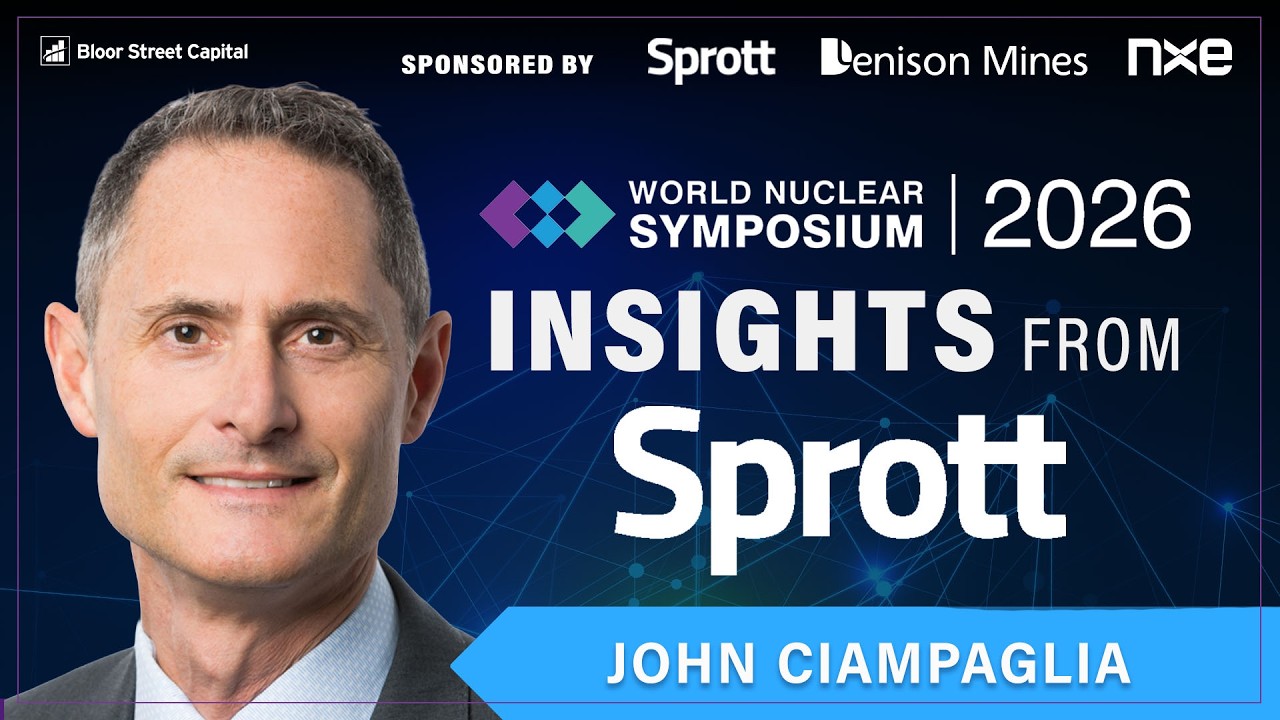
Sprott's John Ciampaglia on Uranium and SPUT
- Top takeaway As host, Jimmy Connor frames the conversation around investor sentiment and macro crosscurrents — the Middle East conflict, oil up 50–60% on the year, and rising global bond yields — and asks the headline question on how an AI IPO wobble could affect uranium.
- He drives the deep-dive segments on SPUT's 2026 activity, the $90 spot context, and flows into Sprott's copper, gold, and silver products.
Sprott Physical Uranium Trust (SPUT) has bought roughly 7 million pounds of U3O8 so far in 2026, racing toward its 9-million-pound annual purchase limit. Hyperscalers (the cloud and AI operators) are signing long-term power agreements, pulling fresh capital into uranium as AI data centers demand baseload power. Western utilities are quietly returning to RFPs (requests for proposals) to refill depleted inventories, while China builds around 8 new nuclear reactors per year. Despite a quiet 2026 spot and term market, Sprott is seeing renewed rotation into uranium equities and inflows across copper, gold and silver products. Sprott argues the broader commodity bull cycle is in its early-to-middle innings, as decades of underinvestment set up structural supply deficits.

Denison Mines Moving Toward Uranium Production | David Cates
- Top takeaway He hosts the interview and frames 2026 as a transformational year for Denison, posing structured questions on Phoenix construction, Saskatchewan labor, capex and financing, contracting, Griffin, and exploration partners.
- He highlights Phoenix's positioning as the first new large-scale uranium mine in the region since Cigar Lake as the headline thesis of the conversation.
Phoenix is Canada's first in-situ recovery uranium mine, now in full-scale construction with first production targeted for the second half of 2028. Phoenix's two-year construction, short by mining standards, avoids sinking a shaft or mill and is funded through a convertible bond plus uranium inventory sales. At full ramp, Phoenix will average 6 million pounds of uranium per year over a 10-year mine life — among the largest new uranium mines. Denison funds Phoenix with low equity dilution by selling physical uranium stockpiles acquired in 2021 at ~$30/lb, now realizing above $90/lb on fixed contracts. The Griffin underground uranium project (~$737M capex) is being technically de-risked to follow Phoenix, funded from Phoenix cash flow rather than new equity.

Per Jander: Insights on the Uranium Market
Spot uranium is held near a hard $85/lb floor because record term prices of $96-$97 let utilities, traders, and producers step in as a carry trade — Pierre sees very little downside at $90. Term contracting year-to-date looks low at ~37M lbs, but huge unreported Indian deals with Cameco and Kazatomprom (~$2B each, ~18-20M lbs) hide a genuinely active fall market. The U.S. NNSA just committed to 4M lbs/year of U.S.-origin uranium for 10 years starting 2030, against current U.S. mine output of only ~2M lbs/year — a clear domestic supply gap. Conversion sits near $60/kg and enrichment spot around $215/SWU, both at all-time highs; the bulk of post-Ukraine rush-buyer demand has rolled back to a steady U3O8 run rate. Pierre says he is talking to SMR developers who have not yet secured fuel, expecting new demand from that segment as units advance.
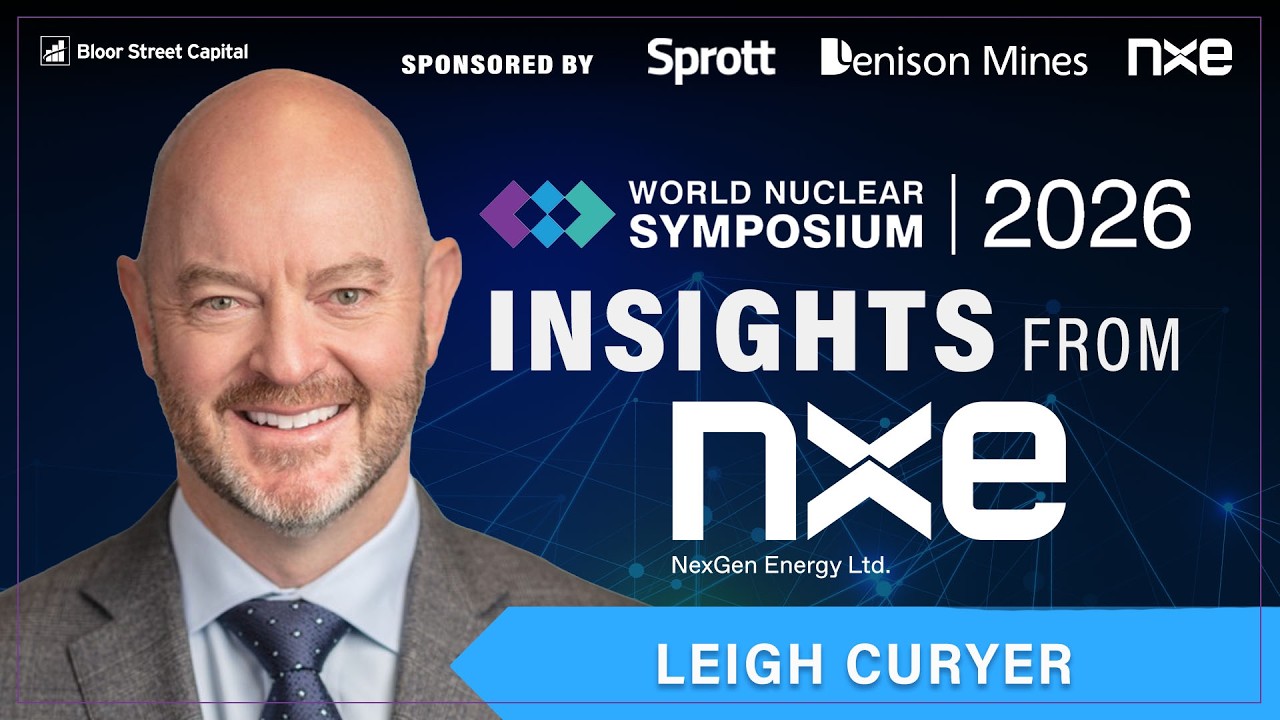
NexGen Energy Update: World Nuclear Symposium 2026 Insights
- Top takeaway Leads the interview by pressing NexGen on construction milestones, financing options for the $2.2 billion Canadian capex, exploration at PCE, and the contracting pipeline
- Asks about broader uranium market dynamics, including inflation impacts on operations, scarcity of mine supply, and the geographic mix of investor interest from North America, Asia, and Europe
NexGen's Arrow Mine started construction August 13 after final federal permit; first production is targeted in roughly four years. About $1B in treasury covers operations into late 2027, with the $2.2B Canadian capex balance to be funded by mid-2027. PCE exploration now runs five rigs, building out a second deposit alongside the Rook I development. Contracting has signed more than 11.3 million pounds so far in 2026, with additional offtake talks in progress. Investor takeaway from the World Nuclear Symposium: tight uranium supply and Canadian sovereign-risk appeal are drawing fresh global interest.

World Nuclear Symposium 2026: Insights with Sama Bilbao y Leon
World Nuclear Symposium 2026 drew 1,200+ attendees from 50+ countries, roughly 1.7x the ~700 attendees since the host first attended in 2023. Global nuclear capacity must roughly quadruple from ~400 GW today to ~1,600 GW by 2050 to meet country-stated targets — the industry's central deployment challenge. The 2025 global fleet set a record, averaging a capacity factor above 83% as the existing reactor base runs harder alongside new build. China leads the build-out with 39 reactors under construction, while Central Asia, Africa, and ASEAN are tracked as emerging newcomer markets. A new World Nuclear Investment Guide aims to give financiers and operators a shared language so nuclear qualifies as a mainstream infrastructure asset class.

Canada vs. America: Which Economy Is In Worse Shape | David Rosenberg
Rosenberg argues the 2026 Treasury yield surge reflects a Fed policy reset, not fiscal or inflation worries. Despite Kevin Warsh's hawkish tone, Rosenberg doubts the Fed will hike rates mid-September; Powell and other dissenters are likely to push back. Energy at $90+ oil is acting as a tax on US consumers; combined with a no-hire, no-fire labor market, consumer-led recession odds are rising. Carney deserves credit for fast-tracking six resource projects at the federal level, but high corporate taxes continue to drive Canadian investment abroad. Rosenberg Research launches the ROSY ETF on September 9 with Corton Capital, a global multi-strategy fund uncorrelated to major equity indices.

Who Blew Up Nord Stream? The Inside Story of the Pipeline Sabotage | Bojan Pancevski
A six-person Ukrainian crew destroyed three of four Nord Stream lines for about $250,000 — a fraction of the pipeline's roughly $20 billion replacement cost. Europe is replacing cheap Russian pipeline gas with costlier LNG, with floating terminals alone costing about a million euros a day. Cheap drones priced around $25,000 are neutralizing far costlier Western military platforms, reshaping the cost calculus for defense and critical infrastructure. Western sanctions have throttled Russian oil and gas revenues without collapsing the economy, as Moscow reroutes trade through Central Asian neighbors. Germany's pre-2022 reliance on Russian gas, roughly 55% of supply, exposed it to political pressure the moment conflict began.

Eric Sprott on Gold, Silver, & His Biggest Investing Wins and Losses
- Top takeaway Connor frames the interview around Sprott's record as one of the most successful resource investors, citing a single trade worth over $1 billion in gains and another losing more than $250 million.
- Connor sets up the current-cycle comparison by citing Nvidia's roughly $2 trillion market cap, 40-times-revenue multiple, and approximate 12% of US GDP share as the AI bubble's defining statistics.
Sprott frames gold and silver as the ultimate bear-market refuge — central banks flipped from sellers to buyers, and weak currencies reinforce the case. He argues the biggest mispricings sit in under-followed small caps — being a numbers guy nobody else is looking at is his edge. Kirkland Lake proved high-grade ore plus patience equals a $1B win; Pure Gold's bankruptcy showed even strong theses cannot overcome bad geology. He keeps pressing high-conviction positions through multi-year drawdowns and rarely sells — patient capital compounds in resources. Sprott calls the AI bubble the largest yet, with 40x sales echoing 2000 — and gold's bull run, he argues, has just begun.
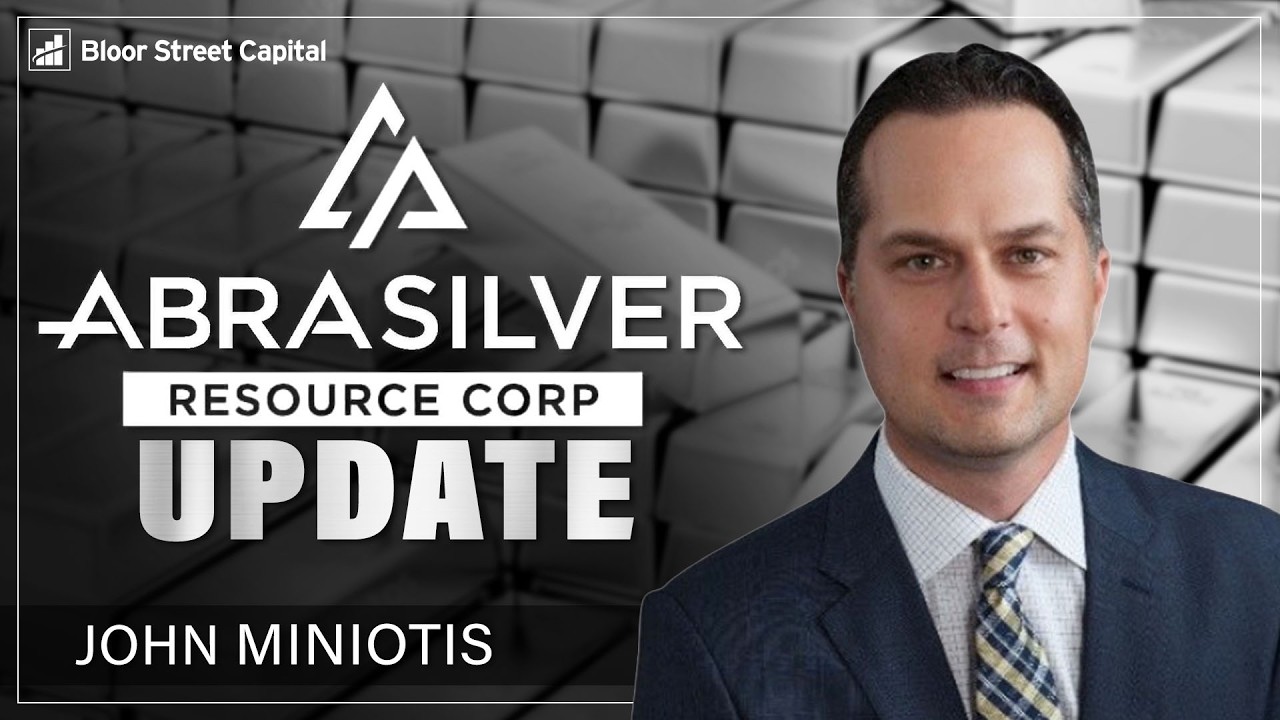
Abra Silver Up 45% YTD - More To Come? | John Miniotis and Jimmy Connor
- Top takeaway Frames the interview around AbraSilver's shift from explorer to developer, pressing for specifics on DFS economics, production mix, and upcoming catalysts.
- Highlights the stock's 45% YTD gain and probes the institutional breadth of the recent $50M raise, signaling close attention to financing ahead of the larger construction package.
Diablillos' DFS posts a $4.2B Canadian after-tax NPV at conservative $50 silver and $3,650 gold — robust economics investors can actually underwrite. AbraSilver is one of the few mid-tier developers holding Argentina's RIGI — locking in 30 years of tax, FX, and duty stability. With ~$70M cash after the raise, the company is mixing term debt, a silver or gold stream, and equity to fund the $720M capex build. Diablillos targets Q4 2029 first production, with peak output of 19M ounces silver per year — set to be the largest primary silver mine globally. Phase Six step-out drilling continues alongside construction prep, leaving room for resource growth and a possible expansion study.

Don't Buy Real Estate in Canada | Ron Butler and Jimmy Connor
Canadian real estate is in a multi-year downturn led by Ontario and British Columbia; Toronto condo prices are down roughly 50% from peak. Ron Butler argues rising purpose-built rental supply, falling rents, and shrinking population will keep pressuring GTA condo owners for years. He advises young buyers in Toronto and Vancouver to rent and push back hard at lease renewals rather than chase ownership. GTA single-family construction starts sit at a 55-year low, which Butler says should eventually put a floor under low-rise prices. On policy, Butler pans Ontario's premier but gives PM Carney qualified credit for pivoting toward pipelines and resource development.
Key Works
Long-form interviews with mining executives and commodity strategists; nearly 500 videos focused on uranium, gold, silver, copper, and critical minerals.
Audio version of Bloor Street Capital interviews covering resource investing and wealth preservation.
Recurring multi-day virtual conference featuring leadership from Kazatomprom, Cameco, Denison Mines, enCore Energy, UEC, Ur-Energy, Sprott, and other uranium names; promoted by the World Nuclear Association.
Specializations
Disclaimer: Jimmy Connor has NOT endorsed this platform and is not affiliated with Pixys in any way.