Brian Lenny
Founder & Host | Mining Stock Education | Engineering-trained interviewer of junior mining geologists, analysts, and executives
"Founder of Mining Stock Education; engineering-trained interviewer who makes junior mining evaluation accessible to everyday investors."
Biography
Brian Leni, P.Eng. (Professional Engineer, a licensed engineering designation in Canada), is the founder and host of Mining Stock Education (MSE), a long-running interview platform and podcast covering junior mining stocks — the small exploration and development companies responsible for most new mineral discoveries. A trained engineer who worked in mineral exploration before launching the platform, Leni is known for interviews that translate geology, financing structures, and market timing into plain terms for non-technical investors.
Leni launched MSE in 2014, and the platform has published hundreds of episodes across multiple metal price cycles. His guests range from fund managers and newsletter analysts to economic geologists and mining company executives. Recent coverage illustrates the range: a conversation with economic geologist Neil Adshead on how he screens early-stage junior companies, and an interview with analyst Nicole Adshead-Bell on copper's rising profile as a critical mineral. Episodes are distributed through the MSE website, podcast feeds, and YouTube.
Leni's engineering background shapes how he runs an interview. He presses guests on the specifics that determine whether a junior survives: drill results, the quality of a resource estimate (a calculation of how much metal a deposit contains and how much confidence the market can place in that number), share structure and dilution, financing requirements, and jurisdiction risk. Through his Field Notes project, he goes beyond hosting — he documents his own evaluation process and investment decisions in story format, giving viewers a worked example of the baseline method for judging a junior mining company.
For investors building their knowledge, Leni's value is educational rather than predictive. Following MSE means hearing experienced evaluators repeatedly weigh geology against share price, capital structure, and management quality — the questions worth asking before buying any junior stock. His coverage currently spans precious metals, copper, and uranium juniors, with ongoing attention to the macroeconomic conditions that drive the sector.
Videos (33)
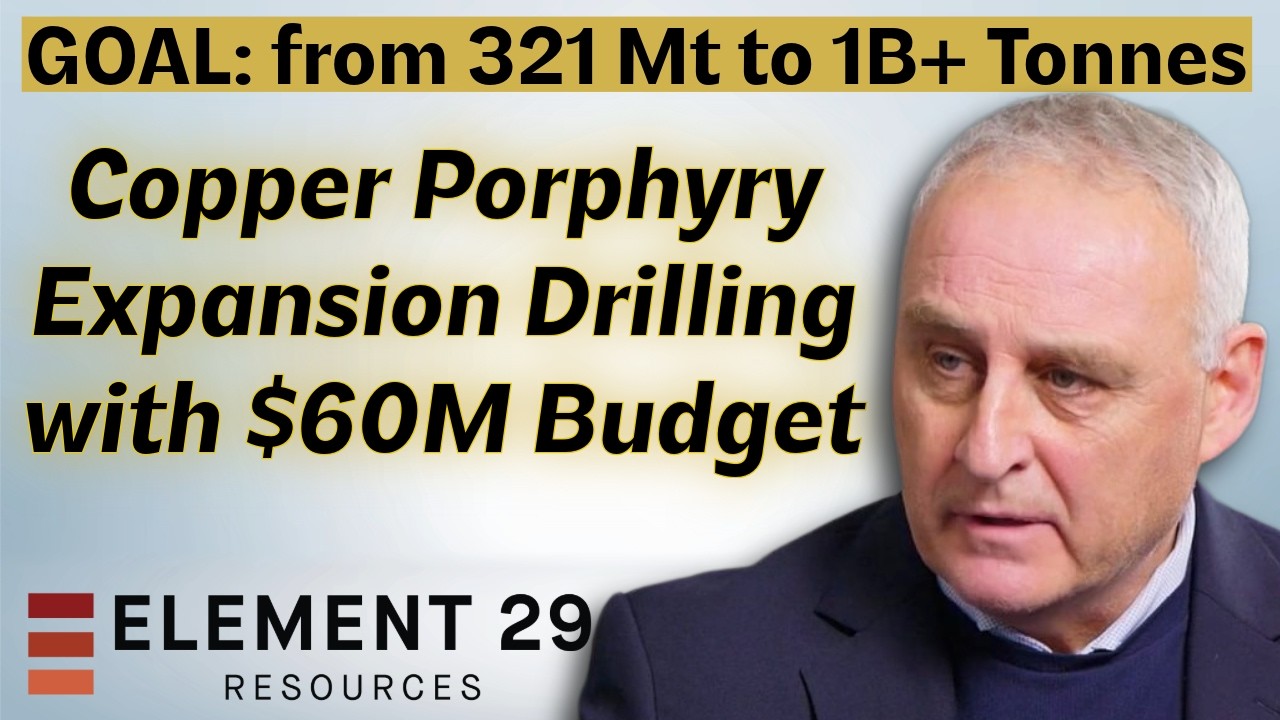
Element 29 Chases a Billion-Tonne Copper Porphyry in Peru with a $60M Budget: CEO Richard Osmond
- Top takeaway Lenny discloses he is a personal investor in Element 29 and says the project's location is what first drew him to the story.
- He calls the deep Zone 1 drill results — 1,500 m-plus holes around 0.58% copper equivalent — among the best drill results in the world this year.
- He rates Element 29's strategic shareholder list, including Randy Smallwood, Alex Gubbins, Ross Beaty, and George Brack, as among the strongest of any junior under a $500 million market cap.
- He frames the setup as a supply-driven copper bull market paired with a catalyst path of ongoing drill news, met work, and a resource update in the next year.
Element 29 is testing whether Elida is a cluster of porphyries big enough to double its 321-million-tonne pit toward a tier-one target. About $47 million raised in 2026 plus $11 million in warrants gives Element 29 close to a $60 million budget for years of drilling. Deep drilling at Zone 1 shows more chalcopyrite and less pyrite with depth, a vector suggesting the deposit's best part is still untested. The guest argues copper faces a supply gap: new mines take 15 to 20 years while demand grows by roughly a million tonnes a year. Metallurgical testing and an upgraded resource estimate, run by a Quebec engineering firm, are the next de-risking steps toward a preliminary economic study.

Snail-Mail Stock Promos, Short Sellers & Visible Gold: Junior Mining Insights with Powers & Leni
- Top takeaway After three to four site visits between mid-August and mid-September 2026, says on-site due diligence is close to a prerequisite before taking a size position, paired with a preference for concentrating in 10-15 companies rather than 30-50.
- Calls short selling in its purest form a net good for the sector — if puff-piece promotion is allowed, negative reports must be allowed too — while opposing naked short selling and noting legitimate short reports usually point to something investors should watch.
- Prefers companies say nothing about visible gold before assays: pre-assay VG promotion usually backfires, and he cites a company that had to retract a VG release earlier in 2026 as the kind of mistake that destroys trust.
- Urges newer investors to specialize by deposit type or exploration style — shear-zone gold, VMS, exploration under cover — instead of holding high-level metal exposures, arguing specialization pays off multiples in exploration investing.
- Reads the more subdued, skeptical Metals Investor Forum as opportunity, expecting any generalist fund money to go into isolated, best-marketed stories while momentum-following retail already came and left at the January interim top.
Subdued retail attendance at fall forums contrasts with rising institutional interest; fund inflows look likely to favor isolated stories, not the sector broadly. Twelve-page glossy mailers promoting nickel and tungsten juniors signal heavier promotion; weighing cash, runway, and project substance beats believing the narrative. Specialization pays: pick one commodity or deposit type, learn its signals deeply, and branch out one step at a time instead of staying high-level. Visible gold claims before assays are marketing, not evidence. One company retracted its visible-gold release, so wait for verified results before acting. Site visits and concentration define the co-host's process: see infrastructure firsthand, hold 10 to 15 names, and plan the exit in advance.

Leif Nilsson of Surge Copper Corp. talks to Brian Leni | Metals Investor Forum Sept. 2026
Surge Copper's Berg pre-feasibility study shows $4.6 billion Canadian after-tax NPV (net present value — discounted future cash flow), 24% IRR, 2.8-year payback at $4.75 copper. At today's spot copper price those economics improve to roughly $9.5 billion NPV and 36% IRR with payback under two years. Initial reserves near 1.2 billion tonnes holding about 10.5 billion pounds copper equivalent position Berg to rank as Canada's second-largest copper mine. Formal acceptance into British Columbia's environmental assessment, the Critical Minerals Office and Look West priority list build permitting momentum toward a final investment decision. Three drill rigs advance feasibility-level technical work while Berg joined the Canada Investment Summit deal book courting global institutional capital.

Sam Leung of Centauri Minerals Inc. talks to Brian Leni | Metals Investor Forum Sept. 2026
Centauri Minerals recently debuted on the TSX-V via an Aldebaran spin-out, giving investors a fresh entry to 40,000 hectares across six Northern Argentina gold-copper-silver projects. A desktop resource update at the flagship Rio Grande project roughly doubled contained gold, copper and silver, anchoring a near-C$30M treasury raise. Two rigs mobilize in Q4 2026: one tests shallow oxide gold and copper, the other chases the deep sulfide source beneath historic high-grade intercepts. At the second project, Agua Scolianta, an AMT and IP geophysical program just started using the same crew from Rio Grande's recent 3D MT work. Management plans to keep optionality intact, evaluating unsolicited Argentine prospect deals rather than granting third-party options on pieces of the existing portfolio.
A Gold Miner That Could Earn Its Market Cap Every Year: Scottie Resources (TSXV: SCOT | OTC: SCTSF)
Scottie Resources plans 2028 production from a BC Golden Triangle gold project using DSO, shipping crushed ore directly to a Taiwan offtake buyer with no mill or tailings facility. A 2025 bulk sample pulled $9 million from 4,600 tons at ~14.5 g/t over nine days, validating the road-to-port shipping model ahead of a Q1 feasibility study. Management targets roughly $150 million in annual free cash flow at $2,600 gold, with average production near 65,000 ounces per year over a seven-year mine life. Eleven commentators split on the plan: a few endorsed the team, while others flagged the $225 million valuation and tight two-year timeline as key risks. Indicated-versus-inferred resource conversion, project financing, and a joint IBA with the Nisga'a are the milestones Thomas pointed to as the path from PEA to first pour.

Brian Leni - Cash Management, Junior Valuations, and Rebound Opportunities in Gold & Copper
Brian Leni keeps ~14% cash and treats black-swan selloffs as his buying window rather than chasing rebounds. He runs his own DCF for development-stage juniors and caps fair-value capture at ~10% unless management is top-tier like Friedland or Lundin. Sirius Resources is his top pick: ~$150M cap for ~3M oz gold beside the Eleanor-Dilmar deal, with Osisko backing and a PEA due spring. He frames gold as the all-weather junior play but copper as offering the highest torque if the macro picture breaks right. Most of his post-Q1 buys carry exploration upside; Kingfisher Metals is his only pure-explorer position, kept small.

Margin of Safety, Mass Psychology, IPOs & Jurisdictional Risks: Junior Mining Insights-Powers & Leni
Powers argues margin of safety in early-stage juniors lives in the management team — a project can stall, change hands, and dilute holders before advancing. Both warn Canadian IPO seed and pre-IPO holders often dump at listing — favor fair pricing and avoid groups known for promotional IPO spend. Both argue, citing Neil Atchied, that a well-marketed lesser project beats an undermarketed great one — investors buy a public business, not a rock. Both frame the Seabridge KSM First Nations pullback as a business negotiation rather than a fatal blow — permits do not lock in a project. Leni urges retail to study critical-metals metallurgy — graphite and rare-earth projects live or die on whether end users can actually use the output.

Trillion-Dollar Mining Stocks, Developer Due Diligence & Stock Picks - Fund Manager Samuel Pelaez
- Top takeaway Brian Lenny, the host, frames the discussion around three concrete topics — current market state, position sizing/index benchmarking, and M&A/upfront capex — and presses Pelaez on how realistic billion-dollar project financings really are.
- Lenny contributes firsthand site-visit color from Argentina on the proposed trans-Argentina water pipeline, calling the idea 'bologna' and noting water has not yet been solved for projects like Filo, Josemaria, and ATEX.
Long-term commodity cycle drivers remain intact; the gold pullback to 3,900 is a buying opportunity as liquidity broadens from gold into copper and oil. Copper developers with billion-dollar upfront capex are being repriced; only projects with strong shareholder registries attract takeover valuations. M&A is now driven primarily by permitting speed, not project scale; ready-to-build assets get taken out first in hot cycles. Concentration beats diversification in junior mining: cap top positions around 20% of the portfolio and go deep on fewer names instead of holding 70-80 stocks. Policy alignment is essential — never invest against government policy; US FAST 41 and Canadian permitting reforms are tailwinds for domestic critical minerals projects.

Rick Rule Symposium Reflections: Conversations, Critiques & Portfolio Construction - Powers & Leni
Concentration beats diversification: two seasoned investors argue a focused portfolio of roughly 10 well-understood juniors outperforms owning 70 to 100 names. Rick Rule's one-hour-per-company-per-month rule shows why 100-stock portfolios are unmanageable; investors without that time should buy sector ETFs instead. Geopolitical shocks hit junior portfolios through financing windows — check which of your companies must raise capital within six months before holding on. Balance sheets expose 'mining the market': compare marketing and travel spend against drilling dollars to separate value builders from salary collectors. AI accelerates research when fed official filings, but the hosts argue network, experience, and firsthand sector knowledge remain the real differentiator.

Doug Already Bought It - Noble Plains Uranium (TSXV: NOBL | OTC: NBLXF)
- Top takeaway Lenny opens the Q&A on the share register: roughly 40% of the float in warrants (18M at $0.10 expiring March 2027), the company's rebirth from a gold-and-lithium shell rather than a clean IPO, and a cash position of a little under $1M.
- He asks what converting the ~1M lb Duck Creek exploration target would cost, and requests cross-sections and pictures in future presentations.
Noble Plains Uranium (TSXV: NOBL) buys historic Wyoming uranium ground and converts legacy drill data into compliant resources, skipping grassroots exploration risk. Flagship Duck Creek holds a maiden 6.36-million-pound uranium resource (83% indicated) beside Cameco's and Uranium Energy's Powder River Basin projects. In-situ recovery (ISR — leaching uranium with solution underground rather than mining it) underpins the plan; management wants 20-25 million pounds before a production decision. Ur Energy took a 6.2% stake and signed a processing LOI, so Shirley Central pounds could pipe into its brand-new adjacent ISR plant. The panel flags a 30-million warrant overhang, serial commodity pivots, and thin cash, yet most agree the nano-cap valuation already prices much of the risk.

Navigating the Sell-Off — Watch Lists, Capitulation, & New Trends with Bill Powers & Brian Leni
- Top takeaway Brian says he prefers the action in a bull market but performs better in uncertain markets where fewer people are paying attention, because that gives him time to pick off the better companies with less competition and more time for due diligence.
- Brian says he has held many niche metals but not bought one, because he does not know the supply and demand drivers of those commodities well enough; he would treat such a position as a short-term trade to capture a price spike and then move on, with selling being the more important half.
- Brian says he met several very technical CEOs whose pitches were technically strong but put no thought into how to sell the story, and says he would rather back a CEO who combines communication skill with clearly verifiable execution than a purely technical operator at a sub-$50M market cap.
- Brian says a lesser-known story where the marketing premium is not yet in the price and the underlying commodity looks set up to run is the ideal entry point, because you can get 8 to 10 times quite quickly and then de-risk.
- Brian says most of the CEOs he heard in Quebec were telling the story in a way completely opposite to how they should at this stage of the market, and agrees with Bill that a general audience has to learn the jargon before it can follow the discussion.
Gold's pullback from roughly $5,500 to $4,000 has punished junior mining equities, with one host down 43% on a recent position. Tranche buying spreads entries over time, and pre-assessed downside rather than market noise decides whether a sell-off is an opportunity. Watch lists earn their keep in uncertain markets: assign a value to each company first, then a sell-off becomes a decision, not a reaction. A capitulation bottom is only real if the drop has nothing to do with the company; management exits and forced sellers can mimic bargains. Direct Ship Ore is fashionable, so demand a signed offtake letter and community buy-in before believing the near-term production story.

Gold Stock Valuation Tips for a “Generational Opportunity” - Analyst Ron Stewart
- Top takeaway Argues M&A is a way to make money regardless of where the market heads and presses Stewart on what will drive acquirer-target pairings in the second half of 2026.
- Frames the Q1 2026 rally as 'just a blip' in something much bigger and questions whether analysts using $4,000 gold are too conservative with gold trading near $5,000.
- Raises whether advanced juniors should push to FID and build their own mines instead of positioning for takeover, and contrasts small high-grade copper deposits with multi-billion-dollar porphyry capex.
Low AISC (all-in sustaining cost — what it really costs to produce an ounce) producers offer the safest margins as costs compound about 7% yearly. The guest sees the pullback as a generational gold opportunity and urges homework now rather than backing up the truck amid Middle East volatility. Quality mine builders are scarce, so juniors nearing FID (final investment decision) often sell rather than build, making people the top investment criterion. Clean producer balance sheets and wide valuation gaps set up an M&A wave, with acquirers using NAV premiums to buy developers cheaply. Copper demand looks secure long term on electrification, and the guest cites a 3 to 400% value lift crossing into production.

A $95 Million Company Sitting On a $340 Million Mine
- Top takeaway Flags the warrant overhang as his main concern, asking who holds the warrants and how much insiders own, and warning they could cap the share price in the wrong scenario over the next couple of years.
- Asks about liquidity — cash on hand and the cost of the two-phase 50,000 m program — probing how much of the recent ~$27.5M raise remains.
Sonoro Gold's PEA (Preliminary Economic Assessment) for Cerro Caliche shows a $360 million after-tax NPV at $3,500 gold, versus a $95 million market value. Management argues the Mexico discount reflects permitting paralysis under the prior administration, with approvals now accelerating under new leadership and stricter standards. A 50,000-meter, two-rig drill program targets higher-grade zones at Batamote, Diana and newly acquired Acuna Landia, aiming to lift grades and resources. PEA economics rest on 72% heap-leach recovery, $83 million initial capex and $1,900 AISC (All-In Sustaining Cost — the full cost per ounce), which panelists questioned. Panel debate weighed warrant overhang, thin institutional ownership and Mexico risk against management's track record, production-first plan and recent $51 million raise.

Brian Leni - Investors Rotating Money In Metals: Copper & Copper Stock Outlooks
Capital is actively rotating away from precious metals into the broader commodities space, creating new opportunities for investors. Negative treatment and refining charges indicate a tight physical market, suggesting the current copper price may be a long-term floor. Investors should maintain tactical cash positions to capitalize on high-upside exploration opportunities during periods of market uncertainty.
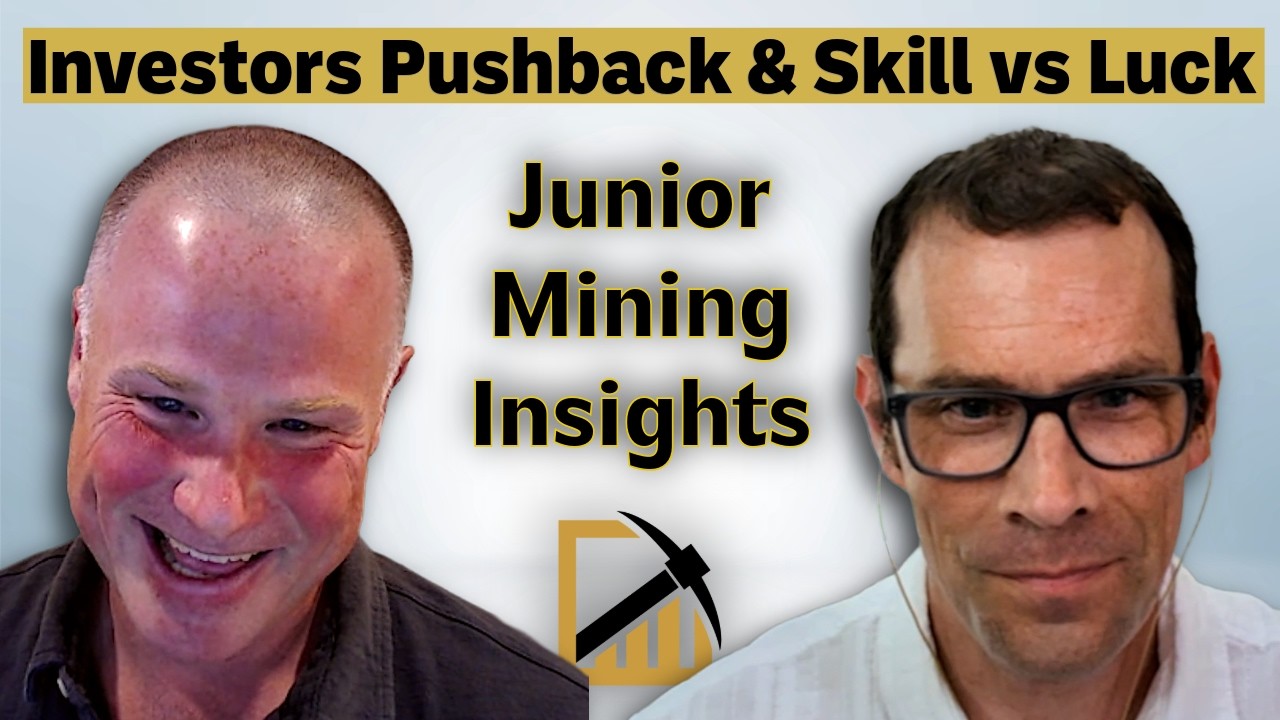
Investors Pushback, Skill vs Luck, & Director Incentives – Junior Mining Insights with Powers & Leni
Brian Leni shares his investment in Aurion, demonstrating that patience with a thesis can pay off despite significant timing delays. The hosts argue that director compensation should be scrutinized, warning that cash-heavy pay packages can signal misaligned shareholder interests. Leni and Powers advise building a disciplined process focused on downside protection and avoiding narrative-driven hype.

Dustin Perry & Brian Leni discuss Kingfisher Metals at the May Metals Investor Forum
Kingfisher Metals holds the largest contiguous land package for a junior explorer in BC's prolific Golden Triangle, offering significant district-scale upside. The company is systematically integrating historical data with proprietary geological concepts to refine and drill high-priority copper-gold targets. Investors gain direct access to vetted junior mining management teams, which is a critical factor for assessing company success and potential.
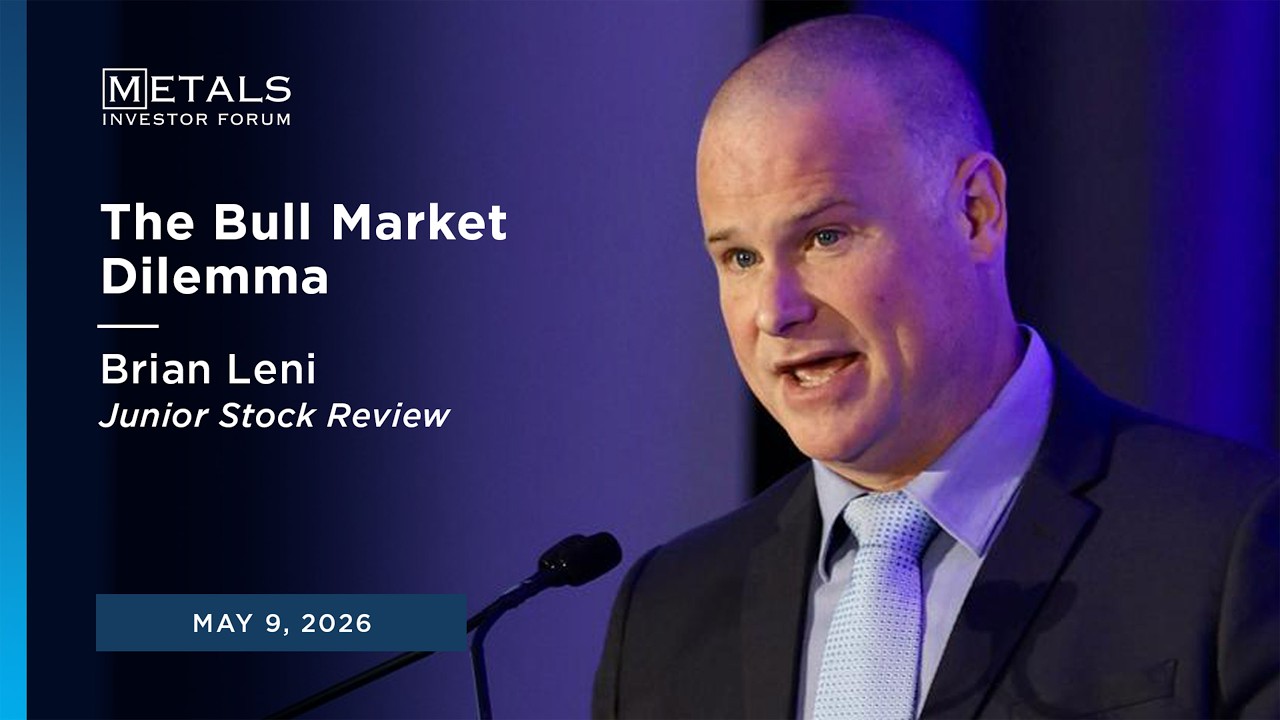
“The Bull Market Dilemma” | Brian Leni at Metals Investor Forum Vancouver 2026
Brian Leni, Founder of Junior Stock Review, presents a framework for navigating the psychological and strategic challenges investors face during a metals bull market. The Metals Investor Forum provides exclusive access to vetted junior mining companies with excellent management, strong financials, and promising properties. The event emphasizes the critical importance of direct, face-to-face interaction with management teams to properly assess a company's potential for success.

Shady CEOs, Dirty Directors & the DCF Dilemma?! – Junior Mining Insights with Powers & Leni
Bill Powers and Brian Leni share firsthand experiences with dishonest CEOs and directors, warning investors that misplaced trust in management is a common pitfall in junior mining. The hosts analyze specific regulatory actions, including a BCSC (British Columbia Securities Commission) settlement for late insider reports and an OSC (Ontario Securities Commission) enforcement application against Emerita Resources. The discussion highlights the DCF (Discounted Cash Flow — a valuation method estimating future cash flows) dilemma for development-stage companies, questioning the reliability of projections used to justify project economics.

Brian Leni - New Valuation Reality for Precious Metals Stocks & Navigating the Developer Landscape
Precious metals equities now demand spectacular catalysts for market rewards, shifting from a broad rally to a highly selective environment. Disciplined portfolio management and rigorous technical milestone tracking are essential for identifying junior miners ready for a major re-rating. Geopolitical conflicts in the Middle East are actively reshaping the investment outlook for both energy and gold markets heading into 2026.

Junior Mining Volatility, Opportunity Cost, Overthink & ‘It’s Cheap Enough’ - Powers & Leni Discuss
Powers and Leni argue that emotional discipline and a consistent process are essential for navigating the extreme volatility inherent in junior mining stocks. The speakers caution against overthinking investment decisions, suggesting that recognizing when a stock is 'cheap enough' is often more effective than waiting for a perfect entry point. Both investors emphasize the importance of understanding opportunity cost and prioritizing capital allocation towards real assets with clear cash flow potential.
Key Works
Interview platform and podcast covering junior mining stocks, geology, and resource investing for retail investors, with hundreds of episodes across multiple metal cycles.
Video series in which Leni presents the baseline process for evaluating junior mining companies in story format, sharing his own investment decisions and project reviews.
Specializations
Disclaimer: Brian Lenny has NOT endorsed this platform and is not affiliated with Pixys in any way.