Agnico Eagle's Next 1.5 Million Ounces Come From Mines It Already Found
CEO Ammar Al-Joundi laid out a growth plan adding about 1.5 million ounces of annual production from four already-permitted projects, led by plans to push both Detour and Malartic past one million ounces a year. He also argued that NPV math undervalues multi-decade mines, and described a six-years-in-the-making, three-company consolidation in Finland.
Investor angle
For investors, the testable idea is that markets misprice long-life mines because net present value math credits only about a decade of cash flow. If Al-Joundi is right, the signal to watch is mine-life extension — Detour past 2060, Malartic on a 1923 ore body — rather than discovery spending. The growth plan is concrete: Detour from about 700,000 ounces a year toward one million-plus, Malartic from about 600,000 the same way, a fourth Nunavut mine at 400,000 to 450,000 ounces, and Upper Beaver with its shaft reportedly ahead of schedule, together about 1.5 million added ounces from permitted projects. The Finnish consolidation of three companies is a longer-dated option on ground the company says it studied for six years. Caveats: every figure is the CEO speaking at a promotional symposium, Rule has held the stock for three decades and his conference sponsors own the exhibitors, and no filings accompany the video. Treat this as management's narrative to verify, not verified results.
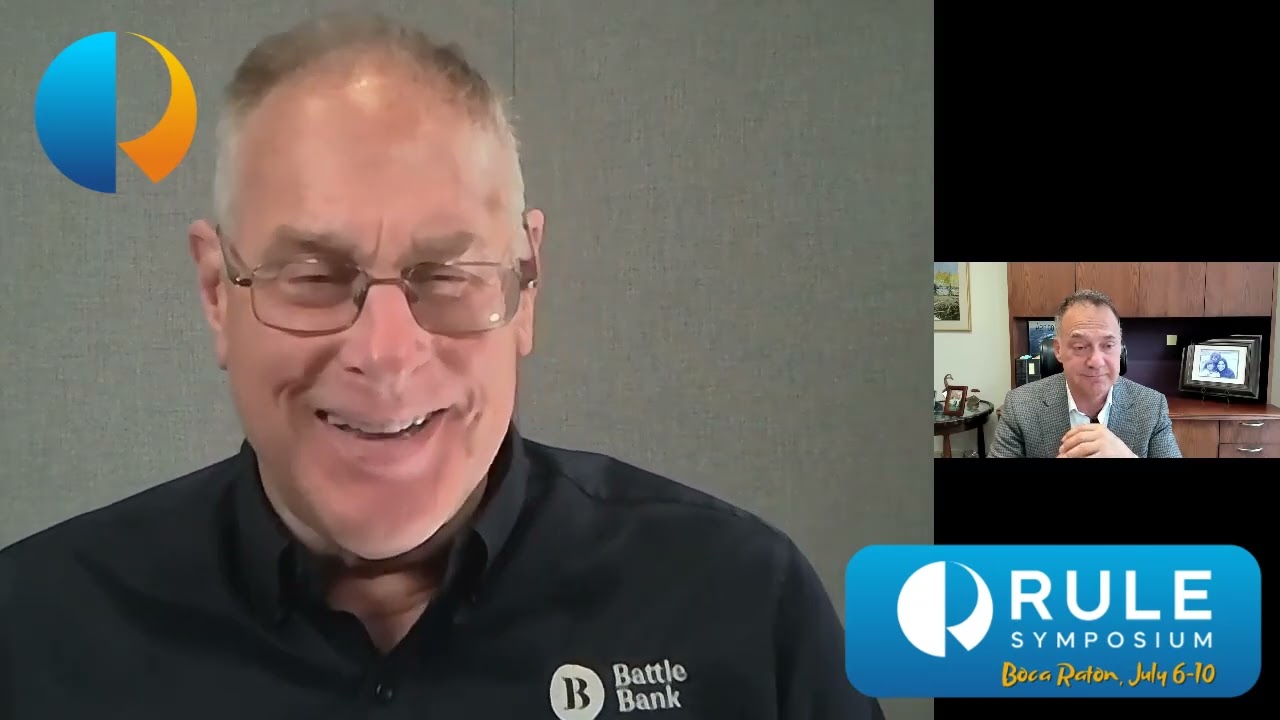
Rick Rule did not hide his bias when he opened this conversation. He has owned Agnico Eagle (AEM) for three decades, calls it part of his "big three" gold portfolio, and disclosed that every public company exhibitor at his conference, Agnico included, is held in the event sponsors' accounts. The interview also promotes his Natural Resources Investment Symposium, held July 6-10, 2026 in Boca Raton. With that context set, the substance here is CEO Ammar Al-Joundi's own account of how Agnico grows, and it is specific enough to check against company filings as events land.
## Growth without finding anything new
The core of the interview is a growth plan that avoids the two hardest parts of mining: discovery and permitting. Al-Joundi counted four projects that together add about 1.5 million ounces of annual production: the underground build-out at Detour, the expansion at Malartic, a fourth Nunavut mine, and Upper Beaver. In his words, these are "mines that you don't need to find because you found them. Mines you don't need to permit because they're permitted."
The Nunavut project sits at the top of Canada, where the Northwest Passage runs, and is designed for 400,000 to 450,000 ounces a year. It would be the fourth mine Agnico has built in a territory he noted is three and a half times the size of France yet holds only about five operating mines. At Upper Beaver, he said the shaft is running ahead of schedule, with the work done by the company's own team.
## Two mines headed for rare company
Detour, which he called Canada's biggest gold mine and one operating since the 1980s, produces about 700,000 ounces a year. The plan is to lift it past one million ounces by mining underground beside the existing open pit. Underground ore runs about 2.5 to 3 grams of gold per tonne of rock, he said, against roughly 0.9 grams in the pit, and the mill, plant, power, tailings facilities (where processed rock is stored), airstrip, and camp already exist. He put the added output at 300,000 to 400,000 ounces a year and said the mine life already extends past 2060.
Malartic tells the same story deeper in time. Its original ore body was found in 1923, it is Canada's second-largest gold mine at about 600,000 ounces a year, and the target is again more than one million ounces using a mill, plant, and workforce that are already in place. By the early 2030s, Al-Joundi expects both mines to clear one million ounces a year, a scale he says almost no mine in the Western world has reached.
## The regional playbook behind it
Rule asked what produces Agnico's high returns on capital and few critical mistakes. Al-Joundi credited a regional strategy. The company enters only regions with enough geologic potential to support multiple mines over decades, and with political stability that keeps the rules fixed while billions are spent. In the Abitibi region of Canada, where Agnico has worked for 70 years and built more than 20 mines, he said the company knows the engineers, contractors, and suppliers, and he claims it produces more gold in Canada than all other miners combined. That local knowledge is why Agnico builds its own mines and sinks its own shafts instead of hiring large outside engineering firms, which he sees as the root of better capital allocation.
Staff turnover is part of the same argument. He said Agnico runs at one-third the turnover of its peers in the regions where it operates, and described meeting a young Abitibi engineer whose father, uncle, and grandfather had all worked for the company. His contrast is fly-in, fly-out camps: at Barrick's Tanzania operation, where he previously worked, imported engineers typically left after about three years.
## A valuation argument investors can test
The most transferable idea in the interview concerns valuation, not geology. Multi-decade mines are usually judged on net present value (NPV, the value today of future cash flows after discounting), and that math typically credits little beyond year 10 or 11. When those years pass, the calculation is rerun and the mine's remaining life is counted again, so the long tail never shows up in today's number. Al-Joundi called the underweighting of long-life assets "a sin in our business," and offered a one-line summary: "The way you make money in our business isn't by building the mine, it's by extending the mine."
## A new district in Finland
The newest claim is geographic. Agnico has operated in Finland for more than 20 years, running what he called by far the biggest gold mine in Europe. About 50 kilometres to the southeast sit land packages (contiguous tracts of mining claims) the company has studied for six years, and roughly two weeks before this interview it announced it would consolidate three companies at once to assemble what its team considers the most prospective ground in Northern Europe. He framed the move as a resource-security trade: Europe outsourced its resource needs to Russia after the Cold War, and that reliance is now unwinding.
## How to use this
Every figure above is a CEO speaking at a promotional event, unaccompanied by filings. The value for readers is that the claims are concrete and checkable: Detour's move toward one million ounces, Malartic's equivalent push, construction progress at the fourth Nunavut mine, the shaft schedule at Upper Beaver, and the terms of the Finnish consolidation. Investors who want to ask directly were pointed to Jean-Marie Clouet, Agnico's head of investor relations.
Generated by Pixys from the source video below. Not investment advice.