Lacy Hunt
Economist | Former Federal Reserve Economist | Macro-Financial Forecaster
"Deflationary macro thesis and prescient calls on interest rates and debt-driven economic stagnation"
Biography
Lacy H. Hunt is an American economist and executive vice president of Hoisington Investment Management, where he has served for decades alongside Van Hoisington. Prior to his career in investment management, Hunt served as a senior economist at the Federal Reserve Bank of Dallas, giving him deep institutional insight into monetary policy mechanics. He earned his Ph.D. in economics from the University of Pennsylvania and has built a reputation as one of the most prescient macroeconomic forecasters in the United States.
Hunt is widely recognized for his long-standing thesis that excessive debt accumulation acts as a drag on economic growth—a view rooted in the work of economists Irving Fisher and Hyman Minsky. This framework led him to correctly anticipate the disinflationary and low-interest-rate environment that persisted for years following the 2008 financial crisis, even as many mainstream forecasters predicted runaway inflation. His quarterly letters and conference presentations are closely followed by institutional investors, particularly those in the fixed-income and natural resource spaces.
For commodity and mining investors, Hunt's analysis is essential context. His recurring warnings about a "perfect storm" of deflationary pressures—including Federal Reserve monetary restraint and productivity shocks from artificial intelligence—shape how resource investors think about the macro backdrop for gold, silver, and other hard assets. When Hunt forecasts recession and deflationary risk, it directly informs the bull and bear case for precious metals as safe-haven assets and for industrial metals tied to economic cycles.
Hunt has been a featured keynote speaker at Adam Taggart's Thoughtful Money conferences, where he has shared the stage with notable resource investors including Rick Rule, Lyn Alden, Grant Williams, and Ed Dowd. His keynotes at these events consistently draw the largest audiences, as attendees seek his updated read on interest rates, debt dynamics, and their implications for asset allocation—including gold and mining equities.
Videos (5)

The Deflationary Era Is Over — Is Inflation The New Normal?
- Top takeaway Hunt revises his earlier interpretation, arguing the disinflation of the earlier period came mainly from a dramatic outward shift of the global production function rather than from debt itself, though rising interest expense also pulled spending away from normal levels.
- He now sees the world's aggregate supply curve shifting inward because of a capital shortage, which he expects to overwhelm debt's still-present disinflationary effect and leave outcomes net inflationary.
- As of the August 2026 interview, he puts net national savings only slightly positive at less than 1%, versus a historical norm of almost 7% in data back to 1929, with past negative episodes in the 1920s and during the GFC.
- He stresses the economic identity that physical investment must equal saving across the household, business, government, and foreign sectors, and argues minimal current saving constrains productive investment.
- He argues that Federal Reserve money creation in the current environment would only allow the pass-through of energy and other costs and would worsen inflation rather than add real productive capacity.
Economist Lacy Hunt now credits the decades of disinflation to expanding global productive capacity, not to rising debt as he long argued. The global production function (the world's capacity to produce goods) is now shifting inward, so capital shortages may outweigh debt's disinflationary drag. America's net national saving rate (all saving available to fund investment) sits below 1% versus a historical average near 7%. Hunt argues Federal Reserve money creation cannot replace real savings and would pass energy costs straight into consumer prices, worsening inflation. If the supply reversal holds, inflation becomes a structural feature of the economic landscape rather than a temporary shock.

Lacy Hunt & Brent Johnson: The US Has Entered A New Inflationary Era That Will Prove Bad For Bonds
- Top takeaway Pivots from his long-held deflationary view, arguing that a structural capital shortage combined with the end of three decades of globalization has pushed the US into a sustained, more volatile inflationary regime with higher trend interest rates
- Notes that net national saving has collapsed from a historical average near 7% of net national income to near zero in 2026, even as massive physical capital demands from AI, semiconductors, the electrical grid, space exploration, and federal deficits are pushing real rates higher
- Frames de-globalization and reshoring as shrinking the global economies of scale and turning the production function adverse, in his view producing durable inflation that overwhelms the disinflationary drag from elevated debt
- Applies the Fisher equation and expects all three components (real rate, expected inflation, risk premium) to rise, citing year-over-year M2 growth approaching 7.5% in mid-2026 versus Friedman's optimum of about 4-4.5%
- Calls the outlook unfavorable for bonds and points to precious metals and other hard assets as historically strong stores of value during inflationary regimes
Lacy Hunt has pivoted from his deflation view: capital scarcity and de-globalization now make inflation the bigger long-term risk for US bonds. Net national saving has collapsed to near zero while AI, semiconductors, grid expansion, and space exploration are driving huge capital demand — pushing real rates higher. All three Fisher equation components (real rate, expected inflation, risk premium) are heading up, with rising Treasury interest expense likely to lift the risk premium. Higher rates disproportionately burden lower-income households (Hunt argues), deepening the K-shaped economy while the top two deciles capture the gains. Hunt expects hard assets and precious metals to perform well in this regime; the dollar may weaken near-term but bounce in episodes.
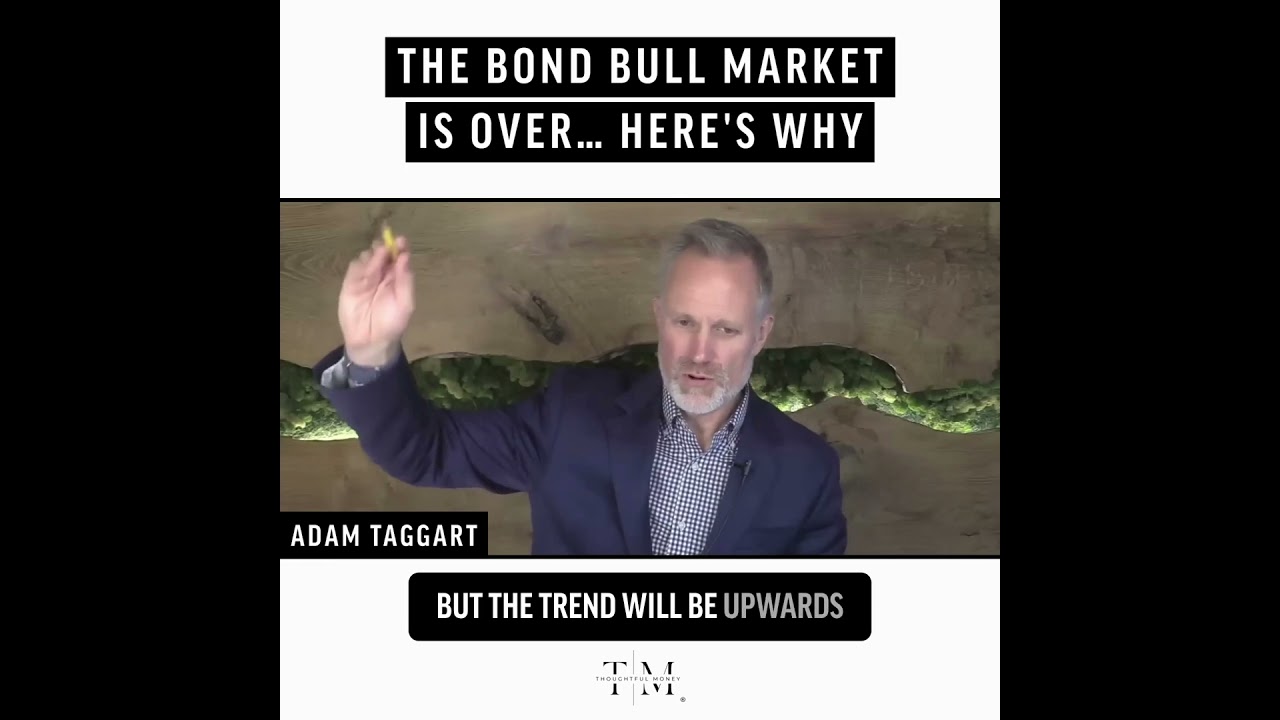
The Bond Bull Market Is Over… Here's Why
- Top takeaway Argues that all three components of the Fisher equation — the real rate, inflationary expectations and the risk premium — now point to higher long-term Treasury rates.
- Expects inflation, which ran between 1.5% and 2.5% for a long time, to move gradually into a 3.5%–4.5% range over time.
- Cites economic historian Neil Ferguson's finding that great powers decline once interest expense outweighs military spending, and argues rising interest expense signals uncorrected fiscal problems that will raise the risk premium.
- Sees a coming period of capital shortage lifting the real rate, and expects far more volatility than the 1990–2020 era — volatility that itself demands a larger term premium.
- Allows that a recession, a deceleration in monetary growth or scaled-back quantitative easing, or a favorable supply shock could temporarily interrupt the upward trend in rates.
Dr Lacy Hunt argues the decades-long bond bull market is over because all three drivers of long-term Treasury yields now point higher. He builds the case on the Fisher equation (which splits a long-term yield into real rate, inflation expectations, and term premium). He expects inflation to settle into a 3.5-4.5% range, well above the roughly 1.5-2.5% regime that ran from 1990 to 2020. Citing historian Niall Ferguson, he flags government interest expense exceeding military spending as a decline signal that also lifts the term premium. He is positioned defensively — fund duration under one year, Treasury bills not bonds — while expecting a volatile trend toward higher yields.
Longtime Deflationist Now Fears Inflation More | Lacy Hunt
- Top takeaway The longtime deflationist now argues the greater risk is inflation: de-globalization has reversed the favorable production function, shifting the aggregate supply curve inward so higher prices come with weaker real GDP growth.
- He expects inflation to move over time from its long-running 1.5-2.5% range into a 3.5-4.5% range, with all three components of the Fisher equation - real rate, inflation expectations, and term/risk premium - pointing to higher Treasury yields.
- He sees capital scarcity as central: net national saving sits near all-time lows close to zero versus roughly 7% of national income since 1929, while AI, grid rebuilding, and defense compete for capital, and he stresses the Fed can create liquidity but not saving.
- He calls the Fed's bill purchases since mid-December a stealth quantitative easing: instead of idle reserves, bank deposits and credit surged - loans and leases up an 8.3% annual rate since June, about 330 basis points above their 10-year average - helping inflation accelerate before Middle East hostilities began.
- He warns interest expense now exceeds defense spending in the U.S. federal budget - a threshold that, citing Niall Ferguson's research, has historically marked the start of an economic power's decline - eroding the government's ability to control the deficit.
Lacy Hunt argues the globalization-era production function has reversed, shifting the economy from disinflation toward structurally higher inflation. Reshoring raises input costs while AI, grid repair, and defense needs compete for scarce capital, lifting the cost of capital. Net national saving near record lows means the Fed can add liquidity but cannot create the saving real investment needs. Hunt expects inflation settling into a 3.5% to 4.5% range, with all three Fisher equation components pointing toward higher long-term rates. Hunt's firm manages bills with duration under one year, and he expects the coming regime to favor commodities and precious metals.

Here's The Latest Outlook From Lacy Hunt, Ed Dowd, Lyn Alden + A Dozen Other Experts
Highlights from the Spring 2026 Thoughtful Money conference featuring 15+ expert speakers discussing macroeconomic trends and recession risks. Lacy Hunt delivered the keynote address, followed by presentations from Ed Dowd, Luke Gromen, Brent Johnson, and Lyn Alden among others. Jeff Clark provided a bonus video focused specifically on gold and silver mining stocks for resource investors.
Key Quotes
"A perfect storm of trends is hampering economic growth, predicting a recession due to factors like deflationary pressures from AI and Federal Reserve monetary restraint."
— Thoughtful Money Conference Keynote (Fall 2024)
"Excessive debt acts as a drag on economic growth, and the historical record is unambiguous on this point."
— Hoisington Quarterly Letter
Key Works
Long-running quarterly publication analyzing debt dynamics, interest rate trends, and macroeconomic conditions with implications for fixed income and hard asset investors.
Repeated keynote presentations at Adam Taggart's Thoughtful Money conferences, covering recession risks, deflationary pressures, and monetary policy outlook alongside Rick Rule, Lyn Alden, and other resource investment experts.
Specializations
Disclaimer: Lacy Hunt has NOT endorsed this platform and is not affiliated with Pixys in any way.