Dr. Joanne Hsu
Director, Surveys of Consumers | University of Michigan Institute for Social Research | Consumer Sentiment & Household Finance Economist
"Director of the University of Michigan consumer sentiment survey — the monthly US reading markets and the Fed use to gauge household confidence."
Biography
Dr. Joanne Hsu directs the Surveys of Consumers at the University of Michigan's Institute for Social Research — the team that has tracked US household attitudes toward the economy since 1946 and has published the Index of Consumer Sentiment monthly since 1978. Because US consumer spending accounts for roughly 70% of GDP, that reading is one of the most-watched leading indicators of turns in growth, rates, and demand. For resource investors, her data frames the macro backdrop that moves gold and commodities — which is why she appeared on VRIC Media, the Vancouver Resource Investment Conference channel, in September 2026 to explain why sentiment sat near historic lows even as spending held up.
Hsu has run the Surveys of Consumers since 2022 and is a tenured research associate professor at Michigan. She spent the previous decade at the Federal Reserve Board in Washington (2011–2022), ending as a principal economist in the Division of Research and Statistics, where her policy portfolio included the Survey of Consumer Finances (the Fed's triennial census of US household wealth and debt) and the Board's consumption forecast. She holds a PhD in economics from the University of Michigan and an AB from Brown University, has published peer-reviewed work in the Review of Financial Studies, JAMA Internal Medicine, and the American Economic Review, and serves on the American Economic Association's Committee on Economic Statistics and the Federal Reserve Bank of Chicago's Academic Advisory Council.
Her approach is to measure rather than speculate. Each month the survey interviews US households about their finances, buying plans, and expectations, and its inflation-expectations series is cited directly by Federal Reserve policymakers. Hsu stresses the gap between hard data and felt experience: since 2020 the top driver of weak sentiment has been the cost of living, with households that own stocks and homes reporting a far better economy than renters and lower-income households — the 'K-shaped' split in which asset owners recover while others fall behind. She points to gasoline prices, tariffs, and housing affordability as the most visible forces shaping consumers' inflation views.
For a resource investor, Hsu's value is the macro signal, not stock picks: her readings on household confidence, inflation expectations, and recession risk frame the rate and dollar backdrop that precious metals and commodity markets trade on. She notes that consumer sentiment has fallen ahead of most postwar recessions, and argues that a durable recovery in confidence will require substantial gains in real (inflation-adjusted) income across the income distribution. The survey's monthly releases are free on the Surveys of Consumers website — a disciplined way to track the same consumer cycle the Fed watches.
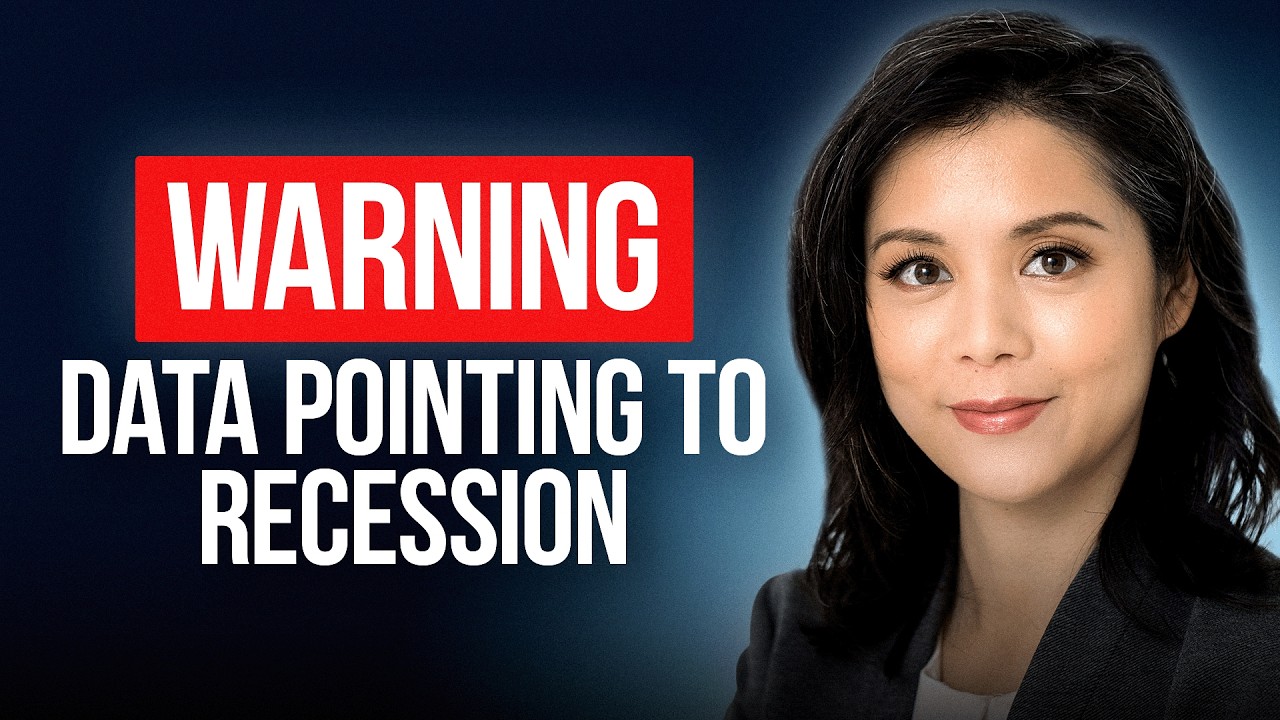
Key Quotes
"Consumers do not feel like they're thriving in the economy right now. They don't feel like their personal finances are in a good place, and they don't think it is a prudent time to buy durable goods or other major purchases."
— Interview on VRIC Media (Vancouver Resource Investment Conference), September 2026
"Before pretty much all of the gray bars — those mark recessions — you tend to see consumer sentiment taking a bit of a nose dive."
— Interview on VRIC Media (Vancouver Resource Investment Conference), September 2026, on the survey's postwar record
"Inflation has been above the Fed's target for five-plus years at this point."
— Interview on VRIC Media (Vancouver Resource Investment Conference), September 2026
Key Works
Federal Reserve Bulletin report on US household wealth, debt, and finances she co-authored while a principal economist at the Fed Board.
Peer-reviewed study in Economic Modelling on how confidence and financial literacy shape households' holdings of risky assets.
Federal Reserve FEDS Note linking asset ownership to uneven recoveries — the theme behind her 'K-shaped economy' commentary today.
Specializations
Disclaimer: Dr. Joanne Hsu has NOT endorsed this platform and is not affiliated with Pixys in any way.