Brian Ostoff
Head of Strategic & Business Initiatives | Arianne Phosphate (TSX-V: DAN) | Former President & CEO; resource fund manager at Windaver
"Leading Arianne Phosphate's Lac à Paul phosphate project and making the case for phosphate as an LFP battery material"
Biography
Brian Ostroff is a Toronto-based resource investor and mining executive who leads Arianne Phosphate (TSX-V: DAN; OTCQX: DRRSF), the company developing the Lac à Paul phosphate project in Quebec. Resource investors know him for a clear thesis: phosphate, long valued mainly as fertilizer, is becoming a battery material in its own right as LFP (lithium-iron-phosphate) batteries — a chemistry widely used in electric vehicles and grid storage — scale up.
His career spans both sides of the junior resource market. He has spent years as a managing director at Windaver Inc., a Toronto firm investing in small-cap resource companies, and has served as a director and chairman of juniors including Canada Silver Cobalt Works. At Arianne, where he was a long-time director before serving as President and CEO and then taking charge of strategic and business initiatives, he has pushed the project beyond the fertilizer market. Under the Travertine joint venture, Arianne produced purified phosphoric acid (PPA — the refined acid required for battery-grade material) at pilot scale and can convert roughly 80% of its acid output to purified grade; in October 2026, a cathode active material (CAM — the core active component of a battery cell) producer confirmed that Arianne's PPA meets its LFP specifications.
His evaluation method starts with demand and product quality. Lac à Paul's phosphate concentrate is unusually high-purity and low-contaminant, which lets Arianne serve fertilizer markets and demanding technical applications from the same deposit. Ostroff argues the value sits downstream — converting concentrate into purified phosphoric acid rather than selling it. He frames phosphate's moment plainly: "Think where lithium was 10 years ago, and that's where phosphate is today... you can have all the lithium you want. But if you don't have phosphate, you still don't have an LFP battery."
For investors tracking critical minerals, Ostroff offers a practitioner's view of how a development-stage company qualifies for a new source of demand: sample testing with battery producers, offtake discussions, permitting, and financing, in sequence. His fund background adds a capital-markets lens — he is direct about what financiers will and will not fund in the junior space. Following Arianne's Travertine milestones and his conference commentary is a practical education in how phosphate fits the LFP supply chain.
Videos (2)
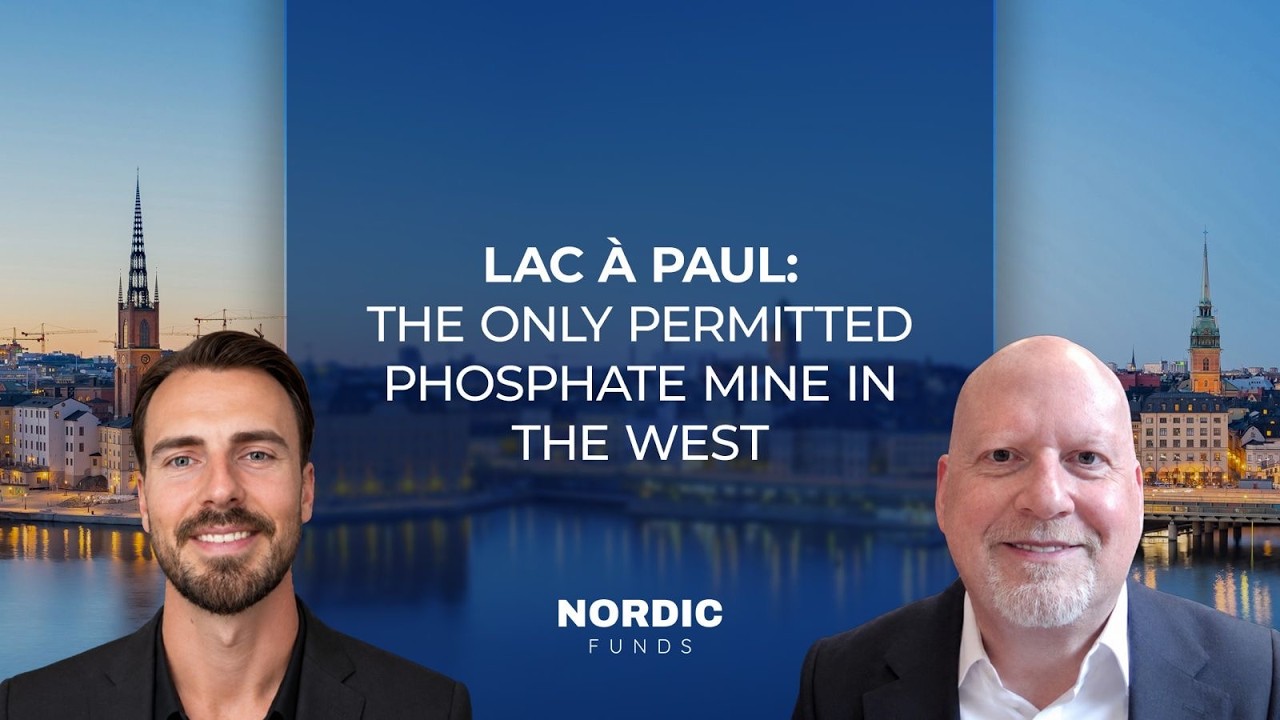
Arianne Phosphate ($DAN | $DRRSF): Leveraging Growing Demand From Both Fertilizers and Batteries
Phosphate demand now spans fertilizer, batteries and pharmaceuticals, with LFP storage pulling purified acid supply tighter. Depository geology sets the economics: igneous hard-rock concentrates purify cleanly, while sedimentary rock limits acid upgrades. Arianne Phosphate's Lac à Paul sits fully permitted in Quebec, close to power, haul roads and deepwater port. China makes over 95% of LFP, so Western buyers are competing for advanced, permitted projects for supply security. Brian Ostroff argues phosphate sits where lithium was a decade ago: early in investor awareness, with few listed options.

How Arianne Phosphate ($DAN.V | $DRRSF) Could Support the LFP Battery Supply Chain
- Top takeaway The speaker (listed here as Brian Ostoff, the same interviewee the transcript names Brian Ostroff) argues phosphate is where lithium was 10 years ago — critical, with LFP and energy-storage demand still early for investors and very few ways to invest.
- He contends the Strait of Hormuz closure is a lasting wake-up call: 30% of world phosphate fertilizer and 50% of sulfur normally transit it, and he expects the supply-security effects to persist even if it reopens.
- His core call is that Arianne can become the dominant purified phosphoric acid producer outside China, based on the 80% upgrade ratio, continuous Quebec production, and low operating cash costs.
- He frames the risk-reward as asymmetric: about $100 million invested over 15-plus years against a roughly $100 million market cap, with a strategic investment from a large global mining company in place.
- Over the next 6-12 months he expects corporates and governments now under NDA to come to the table to help finance and advance the project.
Purified phosphoric acid (PPA — the "white acid" grade for LFP batteries) sells for about $2,500 a ton versus $800 for dry bulk fertilizer. Energy storage systems — about 90% of them LFP-powered — plus data-center and AI buildout are pulling phosphate demand beyond fertilizer. The Strait of Hormuz closure chokes 30% of phosphate fertilizer trade and half of world sulfur, prompting Mosaic and OCP to curtail output. The guest argues phosphate investing today mirrors lithium a decade ago: critical-mineral status, scarce pure-play vehicles, early investor awareness. Igneous phosphate deposits — roughly a dozen worldwide — yield the low-contaminant concentrate that battery-grade phosphoric acid requires.
Key Quotes
"Think where lithium was 10 years ago, and that's where phosphate is today. It has these new applications, it is critical, you can have all the lithium you want. But if you don't have phosphate, you still don't have an LFP battery."
— Interview with SmallCapAsia on phosphate's shift from fertilizer to battery markets
"Having our PPA meet the specifications of a CAM producer is a significant milestone for Arianne and our Travertine JV project."
— Arianne Phosphate press release, October 2026, on positive LFP battery-material test results
Key Works
Company release featuring Ostroff's announcement that Arianne's purified phosphoric acid met a cathode producer's LFP specifications
Feature interview where Ostroff lays out the case for phosphate as a battery material and Arianne's downstream strategy
Disclaimer: Brian Ostoff has NOT endorsed this platform and is not affiliated with Pixys in any way.