Andy Schectman
CEO & Founder | Miles Franklin Precious Metals | Physical Silver Market Specialist
"Warning about physical precious metals market stress and alleged price manipulation"
Biography
Andy Schectman is the CEO and founder of Miles Franklin Precious Metals, one of America's leading precious metals dealers specializing in physical gold and silver investments. With over two decades of experience in the precious metals industry, Schectman has built a reputation as a vocal advocate for physical precious metals ownership and a sharp critic of what he views as systematic price manipulation in the silver market.
Schectman's investment philosophy centers on the belief that physical precious metals serve as essential portfolio insurance against monetary debasement and systemic financial risks. He has consistently warned investors about the growing disconnect between paper and physical precious metals markets, pointing to increasing delivery demands, tighter inventories, and rising dealer costs as evidence of underlying market stress. His company, Miles Franklin, has facilitated millions of dollars in precious metals transactions for retail and institutional clients seeking direct ownership of physical assets.
As a frequent guest on financial media platforms and precious metals podcasts, Schectman provides market intelligence drawn from his direct experience in the physical bullion trade. He regularly appears on Liberty and Finance and other investment-focused channels, where he shares insights about supply chain disruptions, dealer premiums, and the mechanics of physical precious metals markets that are often invisible to paper market participants.
Schectman's market analysis often focuses on silver's dual role as both a monetary metal and critical industrial commodity, particularly highlighting its importance to military and technological applications. He has been particularly vocal about what he perceives as coordinated efforts by commercial banks and other large institutions to suppress silver prices, arguing that this manipulation is becoming increasingly unsustainable as physical demand continues to outstrip supply.
Videos (54)
Treasury Yields Could Trigger a Financial Shock | Andy Schectman
- Top takeaway Argues rising interest rates no longer hurt gold because distrust of bond-market fundamentals has broken the conventional relationship.
- Cites record second-quarter central bank gold buying, over 30 million ounces of September Comex silver deliveries, and heavy Hong Kong flows as price-insensitive physical demand.
- Argues BRICS nations are quietly building interoperable digital payment rails that settle in gold while publicly denying a common currency to misdirect the West.
- Warns that a 10-year Treasury yield moving decisively above 5% into the 6% range would hit Wall Street, real estate, banks, insurers and pensions.
- Says holding bonds of any duration is dangerous, premiums on physical metal are creeping up again, and dollar savings are the wrong place for wealth.
Schectman argues rising interest rates no longer suppress gold because distrust of the bond market has broken the old relationship. Central banks bought record amounts of gold and keep pulling silver off Comex (the main US futures exchange) regardless of price. He warns a 10-year Treasury yield moving decisively above 5% would hit Wall Street, real estate, banks, insurers and pensions. Schectman says BRICS nations are quietly building interoperable payment rails that settle in gold, reducing reliance on US Treasuries. Physical gold and silver remain favored: premiums are creeping up again, and he calls holding bonds of any duration dangerous.

Insiders Buying Gold - Public is Next | Andy Schectman
- Top takeaway Schectman argues that for the first time in over 100 years foreign investors are buying more US securities than US treasuries, calling this 'de-treasurerization' and saying it is driving gold higher even before retail premiums rise
- He contends interest-rate hikes will not meaningfully suppress gold and that rates would have to move 'exponentially higher' to draw investors back to 10- or 30-year treasuries over gold
- He warns the Saudi East-West pipeline outage (around 5 million barrels/day) combined with depleted global strategic reserves will hit the economy with a 3-to-6-month inflation lag and no buffers to absorb it
- Schectman dismisses the CME's new 24/7 silver-futures contract as 'silly' because there is no physical delivery, and ranks holding options for retail investors: personal possession first, then a third-party vault like Brinks, then a segregated precious-metals IRA, then tokenized gold, and only reluctantly an ETF
- He describes a growing trend of US states (Utah, Florida, Texas) passing legislation to treat gold and silver as constitutional money usable in transactions and free of state sales tax
Foreign investors are selling US Treasuries faster than they buy new securities — detreasurization is lifting gold ahead of retail buyers. BRICS is building payment rails and same-day gold settlement to bypass dollar sanctions, not to launch a competing common currency. Gold bull run survives rate hikes when the bid comes from foreign central banks shifting out of Treasuries, Schectman argues. Gold buyers face five custody paths — physical, vaulted, IRA, tokenized, ETF — with auditability and ability to take possession the deciding factors. Utah, Florida, and Texas are letting residents spend constitutional money through state depositories, with sales-tax incentives.

THE DAY OF RECKONING: Why Gold Could Explode as Treasuries Fail | Andy Schectman
- Top takeaway Schectman's central thesis is a coming 'day of reckoning' from years of suppressed interest rates and Fed balance-sheet expansion (about $600B in 2008 to about $9T recently), warning that asset prices distorted by these policies will eventually need to find equilibrium.
- He argues central banks are covertly buying gold at record levels, claiming Q1 actual purchases reached 244 tons versus the publicly reported 16 tons, and demanding physical possession to remove counterparty risk.
- He notes the U.S. 10-year Treasury has had its worst real return in a century (-2% per year over the past 10 years) versus gold averaging about 9.9% per year over 25 years, arguing Treasuries offer no real protection.
- He points to silver's deeply negative swap spread as evidence of physical tightness, with holders reluctant to lend metal and preferring possession over paper claims.
- He cites the UNIT pilot, settling UAE oil with India in a gold-backed digital currency outside SWIFT, as evidence that BRICS+ is methodically building a parallel settlement system using gold.
Central banks are buying physical gold at record levels while lying about purchases, removing counterparty risk by taking direct possession. A deeply negative one-year silver swap spread shows holders refuse to lend out metal, a signal that readily available physical silver is increasingly scarce. A record-wide diesel crack spread and a 40-year-low U.S. strategic reserve point to higher energy-driven inflation through late 2026 and into 2027. BRICS members completed a pilot using the new Unit digital currency to settle UAE oil with India in Shanghai, outside the dollar-based SWIFT system. Schectman argues the U.S. may lean into gold accumulation to softly devalue the dollar, fund reshoring efforts, and reindustrialize domestic manufacturing.
We're Entering The Strongest Seasonal Time Of Year For Gold & Silver | Andy Schectman
- Top takeaway The guest argues the gold sell-off narrative tied to higher rates is 'silly' because the Fed realistically cannot hike with $10T of treasuries to refinance and the worst 10-year performance in roughly 200 years.
- Sees mainstream economic data as 'Management of Perception Economics' (MOPE), citing 38 of 43 months of downward BLS revisions and dismisses the latest jobs beat as noise likely to be revised down again.
- Frames the setup as structural USD debasement — average US income buying 78 oz of gold in 1990 versus 19 oz today — and tells viewers to hold wealth in assets because 'holding wealth in dollars is the same as holding a melting ice cube.'
- Reads the Genius Act (effective January 2027) as a tool that synthetically pins the front-end of the curve via stablecoin-backed 93-day or shorter treasuries, which he thinks effectively neuters one of the Fed's dual mandates and funnels interest income into gold.
- Calls Rand Paul's Fort Knox walk-through 'half-ass' and demands a transparent audit with live cameras, arguing the lack of a real audit is fueling central-bank repatriation and the erosion of trust in US gold custody.
Schectman's base case is a steeper gold path into year-end, with historical fall seasonality stacked on top of a continuing currency-debasement narrative. He sees $10T of Treasuries needing to roll, M2 growth and the ECB now holding more gold than dollars as concrete signals of currency debasement. Schectman argues the Genius Act turns every dollar transaction into T-bill demand, pinning the front end of the Treasury curve. Long-term gold and silver gains face a 28% federal collectibles rate, not standard capital gains, and Form 8300 kicks in above $10,000 cash. Schectman dismisses Rand Paul's limited Fort Knox visit and stresses that gold repatriation is a counterparty-risk statement.
The False Narrative Of Gold's Collapse | Andy Schectman
- Top takeaway Schectman argues the long-term case for owning gold remains intact because $40T in federal debt, rising inflation, and rising energy costs will eventually overwhelm a system unable to service higher rates
- He pushes back on Jeffrey Lubinsky's claim that the physical squeeze is ending, arguing Lubinsky confuses a 25-cent dealer bid cut (risk management) with collapsing end-demand and is extrapolating from too small a sample of days
- He highlights Tether as a new structural gold buyer, having purchased an estimated 73.6 tons since 2024 — more than China's officially reported 49 tons — and possibly buying on behalf of the US Treasury
- Schectman endorses Rick Rule's framing that only about 0.5% of retail investors have meaningful gold exposure, meaning even modest public participation would meaningfully lift prices
- He warns that holding cash in this environment exposes savers to roughly 8% annual purchasing-power erosion under the Cantillon effect, urging that wealth sit in real assets while only transaction money stays in dollars
Weak retail coin bids signal dealer risk management, not collapsing physical demand — Schectman's pushback on the 'physical squeeze over' thesis. Tether (~74 tons since 2024) and central banks together form an unprecedented structural gold bid even as yields pressure prices short-term. Forty trillion in federal debt plus ten trillion in 12-month refis keeps gold's structural bid intact despite short-term pressures. A slow Strategic Petroleum Reserve refill plus a Japan carry trade unwind are the next likely catalysts to watch for gold.

The Emperor Has No Clothes: UST Market Is Breaking Down | Andy Schectman
- Top takeaway Argues the UST market is breaking down under fiscal strain, pointing to Bessent's second intervention within the month preceding this conversation — long-end Treasury buybacks expanded from $2B to $4B per cycle targeting 10/20/30-year maturities — and frames it as de facto yield curve control tied to the Genius Act pinning short rates via 90-day T-bills.
- Calls Trump's 'military is the ultimate intervention' comment beyond anything he has heard before and argues the US cannot force foreign creditors to finance a roughly $40T debt load; notes the system absorbed about $3.8B/day in interest at the time of this interview, projected to reach roughly $5B/day by 2028 (about 1.5 years out) per the CBO.
- Cites the recurring 'Emperor has no clothes' pattern of public interventions exposing how illiquid Treasuries really are, and says Goldman Sachs has shifted its $4,900 gold target from base case to upside risk, with speculators adding roughly $22B in gold futures over the three weeks leading up to this conversation — the largest such move in over a decade.
- Distinguishes inflation (money-supply expansion) from rising CPI, arguing CPI misses financial-asset gains and that capping yields while inflating the base forces price inflation into everyday staples — food, tuition, healthcare — the Cantillon dynamic he calls the 'Cantaloupe effect'.
- Recommends holding liquid hard assets, with gold and silver as his preferred store of value, and points to the Strategic Petroleum Reserve being drawn to roughly a 40-year low as evidence that real energy-cost inflation is being actively suppressed.
Andy Schectman argues Treasury interventions, yield suppression, and Japan's inability to sell U.S. debt show real price discovery is breaking down. Speculators bought $22 billion of gold futures in three weeks -- the largest speculative inflow in over a decade, signaling big money repositioning. Goldman Sachs now flags significant upside risk to its $4,900 gold target as central banks and foreign buyers quietly accumulate via OTC markets. China reportedly bought 167% more gold than its official figures showed in June through the London over-the-counter market. Schectman warns that capping yields while expanding the money supply traps ordinary savers in price inflation while wealthy asset holders benefit.
The Fed Is Trapped — And Gold Knows It #GLD #gold
- Top takeaway Schectman is cited as confident that 'this time is different' from 2011, anchored in record sustained buying by big players.
Andy argues the Fed is trapped between rate hikes exposing financial vulnerabilities and rate suppression driving inflation, with gold breaking out on this thesis. The unusual combination of rising Treasury yields, rising gold, and a falling dollar signals declining global confidence in US debt, not economic strength. Strategic buyers continue accumulating gold at record pace, distinguishing this breakout from the 2011 peak and supporting a structural demand thesis. With oil-induced inflation likely to surface over six months, sophisticated traders are front-running the Fed's inability to let rates climb much further. Roughly $40 billion a month in liquidity provision and quiet yield-curve control point to the end of genuine balance-sheet normalization.
Silver Breakout: The Big Picture Most Are Still Missing | Andy Schectman
- Top takeaway The guest argues the central big picture is inordinately large deliveries by central banks and large players while silver prices have dropped, with China buying record silver in Q1 and large amounts in Q2 of 2026.
- He calls silver's breakout from a falling wedge pattern a significant bullish technical signal, and argues West-controlled price suppression is being challenged as COMEX loses significance and price discovery moves eastward.
- He says smart money is front-running gold and silver because he sees the Fed as cornered: letting rates rise would implode the system, while capping rates forces higher price inflation, so all paths lead to higher gold and silver.
- He warns that systemic risks are converging, including an AI bubble, private equity gating, record margin debt, options exposure, and Treasury market liquidity doubts, citing the recent resignations of the BlackRock and Blackstone private equity heads.
- He predicts retail will buy rather than sell into the next rising silver market, framing the prior spike as a perfect storm anomaly of 300% margin hikes, ETF rebalancing, and 2026 primary allocations, and expects fourth-quarter tightness as 2026 Silver Eagle mintages are small and primary distributors are loaded.
Silver just broke out of a falling wedge pattern — a technically significant move the guest expects to extend, driven by heavy central bank accumulation. Central banks have been quietly buying silver on every dip while COMEX price discovery weakens; last run-up saw forced retail selling distort prices — this time, retail buying. The Fed is trapped: rate hikes risk breaking the bond market and over-leveraged AI bets, while capped yields push inflation that ultimately lifts gold and silver. Energy, fertilizer, and shipping shocks will hit food prices with a six-month lag; wealthy absorb inflation via assets while lower-income households are squeezed. Just-in-time physical silver inventory means small demand spikes can rapidly push premiums higher; the 2026 Silver Eagle mintage has been unusually small.
Are Gold & Silver Breaking Out? | Andy Schectman
- Top takeaway Andy argues that the deepest-pocketed, best-informed buyers — central banks and sovereigns — have been doubling and tripling down on gold while retail sold all year, and he treats that divergence as the strongest signal that the breakout is real.
- He claims the January selloff was orchestrated via a roughly 300% CME margin hike that wiped out open interest and let smart money accumulate at suppressed prices.
- The guest argues price discovery is shifting eastward through same-day settlement exchanges in Dubai, Singapore, and Hong Kong, which he sees as a long-term threat to Western paper price suppression.
- Andy expects retail premiums to normalize upward from current depressed levels and frames the supply side as a 'just-in-time' setup that could send premiums sharply higher on the next buying wave.
- He argues the Fed is trapped between rate hikes and easing, eroding trust in the dollar and US Treasuries, and concludes gold has nowhere to go but higher.
Gold broke out of a falling wedge capping its slide; Andy pairs that technical trigger with sustained central-bank and sovereign accumulation as the structural floor. Physical premiums collapsed under January's margin-hike 'perfect storm' and are now normalizing; Andy expects them to march higher as the next price leg up drives rush buying. Andy argues the Fed's quiet yield-curve control and persistent treasury issuance are eroding reserve-currency trust — exactly the macro backdrop that pulls capital into gold. For retail buyers, Andy recommends dollar-cost-averaging physical purchases, using dealers who hedge, and storing in fully insured segregated vaults rather than safe-deposit boxes. Price discovery is migrating east to Dubai, Singapore, and Hong Kong with same-day yuan and dollar settlement, complicating the West's long-running paper-gold suppression thesis.
Japan EXPOSES US Debt Crisis: The Mask Is Off | Andy Schectman
- Top takeaway Schectman argues private credit is the first domino to fall — restaurant chains (Salad and Go, Smoky Bones) are liquidating because private equity over-promised and assumptions are colliding with rising input costs
- He warns that what looks like 'helping Japan' is effectively yield curve control without the label — keeping the largest Treasury holder from selling US bonds, which he says exposes fragility in the bond market
- He argues the Fed's era of aggressive balance-sheet runoff is over, with $40B+/month of additions he calls QE in disguise, while officials try to redefine inflation toward a 2% target unmet for over 65 months
- He sees gold and silver as having sniffed out real yields and found a floor after the spec-driven correction, with central banks and 'big money' (he names JP Morgan) using the drawdown to accumulate quietly
- He contends real inflation is now showing up in asset prices — 72% of S&P stocks trading above their 200-day moving average — rather than CPI, fitting the Cantillon effect that benefits those closest to money creation
Gold and silver held their post-correction floor with little follow-through selling, suggesting smart money absorbed the weak hands. Central banks and Tether bought gold through the pullback, and Schectman reads that as a signal policymakers can no longer safely withdraw liquidity. Private-credit blowups at restaurant chains may be the "canary in the coal mine" for the broader credit unwind. Japan's yen intervention is effectively US yield curve control — restricting Japan from selling Treasuries to keep bond markets stable. After a six-month pullback, Schectman sees gold at the start of another leg higher, with short-term volatility still likely.

Silver Could Be the Wealth Builder
- Top takeaway The speaker argues silver has the strongest wealth-building potential of the precious metals he discusses, contrasting it with gold, which he views as wealth preservation, not creation.
- He lays out a ranked trade sequence: gold first, silver second (buy silver, then rotate into gold once the gold-silver ratio corrects), and platinum third.
- He downgrades platinum because the U.S. Mint has not struck a platinum eagle in five-plus years and platinum lacks the monetary and biblical history of gold and silver.
- He grounds gold and silver as immutable, multi-generational wealth — cited 700-plus times in the Bible and held by pharaohs, kings, and emperors — and points to a brief glimpse of silver's upside earlier in 2026 as evidence the metal is moving toward where he believes it should trade.
Gold remains the top wealth-preservation asset, but silver carries greater upside if it revisits its price target. Schectman's preferred sequence: gold first, then silver rotated into gold once the gold/silver ratio normalizes. He frames gold as immutable generational wealth held to transfer between heirs, not bought to get rich. Platinum is his third pick, but lacks gold and silver's monetary pedigree and has had no U.S. Mint eagle in 5+ years.
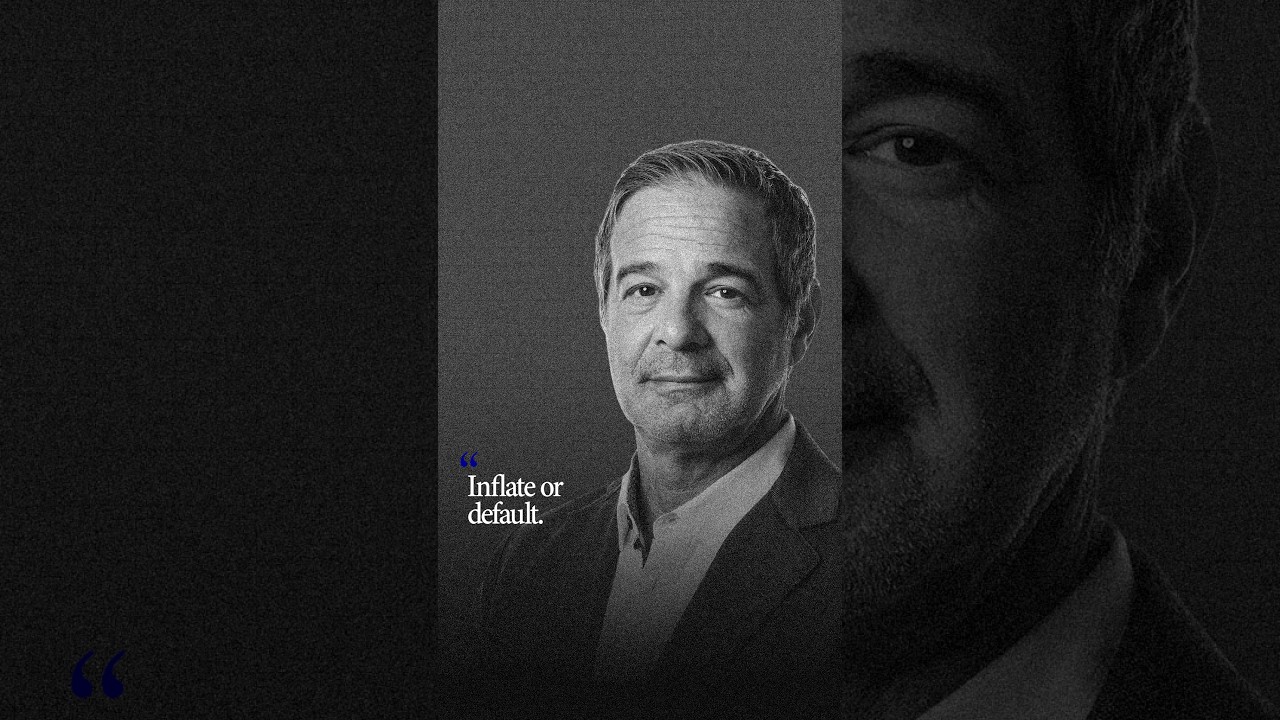
America has two choices.
U.S. debt has, in the speaker's framing, only two endpoints: deliberate currency inflation or outright default — staying the course isn't an option. On-balance-sheet U.S. debt sits below the 300% debt-to-GDP threshold the speaker flags as a historical point of no return. Adding $175 trillion in unfunded Medicare, Medicaid, and Social Security liabilities pushes effective U.S. debt-to-GDP well past 300%, per the speaker.
Breaking Point? Tether's Massive Gold Buying, Japan Crisis & AI Bubble COLLIDE | Andy Schectman
- Top takeaway Andy Schectman argues that AI infrastructure spending resembles prior railroad and internet booms, with investment and borrowing potentially outrunning revenue.
- He warns that concentrated retail equity exposure, margin debt, and options speculation could worsen a market decline.
- He argues that an unwind of the Japanese yen carry trade could disrupt U.S. equities and Treasuries, with market risks underpriced in his view.
- He says intervention can temporarily cover market problems but cannot solve faulty assumptions or underlying imbalances.
- He advocates holding gold and silver as wealth and liquidity rather than retaining savings in dollars, based on his inflation outlook.
The guest argues that AI infrastructure spending resembles earlier investment booms, with debt-funded expansion and uncertain revenue creating systemic risk. The guest says Japan's currency and bond-market stress could pressure global liquidity as yen-funded positions in equities and Treasuries unwind. The discussion frames Tether's reported gold accumulation, BRICS payment systems, and non-dollar commodity settlement as signs of a more multipolar financial system. The guest argues that rising yields alongside a weaker dollar would signal declining confidence in Treasuries and complicate the Federal Reserve's inflation response.

Andy Schectman: Every Signal Is Screaming Buy Gold
- Top takeaway Andy argues that central banks and the most well-informed traders are accumulating gold at unprecedented levels — record Q1 central-bank purchases (World Gold Council says official reports understate by roughly 15x) and someone standing for delivery of $9-10-figure amounts on COMEX every month for 19 months — and reads this as a signal that gold is being rewoven into a new monetary architecture.
- Andy says the U.S. has effectively crossed the debt-trap threshold: with the national debt plus an estimated $175T of unfunded Medicare, Medicaid and Social Security liabilities, the country sits well past 300% debt-to-GDP, and per Triffin's dilemma a weaker dollar and a much higher gold price are the path to reindustrialize and pay down debt.
- Andy argues the world is shifting from paper price discovery to physical price discovery, pointing to China's parallel infrastructure — a 2,000-ton Hong Kong vault expansion plus new vaults in Shanghai, Dubai, Singapore, Mumbai, Moscow and St. Petersburg, same-day settlement exchanges, and yuan-denominated pricing in Hong Kong — as the rails that will challenge COMEX and LBMA price-setting.
- Andy says the Genius Act, by tying global dollar movement to 90-day-or-less Treasuries, will pin the front end of the yield curve and neuter the Fed's dual mandate, leaving the Fed unable to hike meaningfully without breaking the bond, stock, banking and housing markets at once.
- Andy believes real inflation is far above the official 3% — citing John Williams/ShadowStats at roughly 10-11%, Rick Rule at about 8% annual dollar loss, and the M2 expansion — and ranks gold first, silver second (best wealth-creation potential) and platinum third for investors looking past the pullback.
Falling physical supply, record central bank gold buying, and persistent COMEX delivery demand outpace any paper-market price weakness in precious metals. U.S. fiscal trajectory — debt past 300% of GDP and debt service past the Ferguson line — drives gold's secular bid, per Schectman. China, Hong Kong, Singapore, and Dubai are building vaults, exchanges, and payment rails that allow yuan-denominated same-day gold settlement outside the dollar system. Western COMEX silver futures trade roughly 200x available deliverable metal, so paper leverage rather than physical reality sets today's spot prices. Gold ranks first, silver second (best leverage if the gold-silver ratio corrects), and platinum third among the precious metals Schectman is buying right now.

COMEX Crisis & China’s Gold Revolution | Andy Schectman
- Top takeaway Andy argues central banks are accumulating gold at historic levels while publicly understating purchases — central banks reported 16 tons in Q1 but the World Gold Council estimated 244 tons, and China reported 15 tons versus an estimated 45 tons — framing this as 'smart money' buying during the recent price pullback.
- Andy argues China is building a parallel settlement infrastructure — yuan-denominated exchanges in Hong Kong, Singapore, and the UAE, the mBridge and CIPS payment rails, and a Belt-and-Road vault network — with same-day settlement that he says will shift price discovery from paper to physical over time.
- Andy points to record COMEX deliveries as evidence paper-short positions are being tested — citing roughly $20 billion of gold (4.1 million ounces) and 26 million ounces of silver delivered in February 2026 — and says a 10–15% Shanghai arbitrage premium is incentivizing Western traders to ship metal east.
- Andy argues the China and CME moves point in opposite directions — China's largest banks ended retail paper-gold trading in favor of cash-and-carry, while CME on July 24, 2026 launched a 24/7 non-deliverable one-ounce gold futures contract — which he reads as China incentivizing physical ownership while the West incentivizes speculation.
- Andy argues China is bypassing Western silver refiners by going directly to miners in Peru and Mexico to buy dore and concentrate at roughly double Western prices, and says this is driving record Chinese silver imports in early 2026.
China is building same-day physical gold settlement in yuan outside SWIFT, an infrastructure that could erode Western paper-leveraged price discovery. COMEX paper trades roughly 200 times the silver deliverable in a day, a leverage that record physical deliveries are starting to challenge. Central banks reportedly bought 244 tons of gold in Q1 2026 versus 16 tons reported, a 15x gap the World Gold Council flagged. Watch deliveries and central bank accumulation, not paper price, because the smartest money loads up while the public sells.

HUGE Event Monday Could SHAKE Silver Market | Andy Schectman
Schectman argues central banks are dumping U.S. Treasuries to accumulate physical gold, signaling a structural shift away from dollar dependency. China's halt of retail paper gold trading could force physical metal price discovery, potentially tightening the physical silver and gold markets. Schectman warns that simultaneous bubbles across equities, housing, and government debt create compounded risks that may drive investors toward precious metals.

No More Paper Gold in Asia? Everything Changes | Andy Schectman
- Top takeaway Argues Asian buyers have played a long game — first accumulating metal, then building vaults, exchanges, and clearing and settlement infrastructure — before shifting price discovery from paper to physical.
- Suggests the silver pullback around the July 2026 interview may have let the world's biggest buyers accumulate physical at cheaper prices, partly as levered paper positions in China were forced to unwind.
- Frames every reduction in paper leverage as giving the physical market more influence over price over time, while allowing that an immediate repricing could still happen.
- Expects Chinese retail silver buyers, who lose margin accounts the Monday after the interview, to choose physical bars over ETFs.
The guest argues a years-long buildout of vaults, exchanges, and settlement systems is shifting price discovery (how markets set price) toward physical metal. Each reduction in paper leverage makes the physical market more influential over time, though an immediate price jump remains possible. The guest frames the recent pullback as China's levered paper positions unwinding, plus a chance for major buyers to accumulate physical. Chinese retail investors losing margin accounts (trading with borrowed money) will pick ETFs (exchange-traded funds) or bars; the guest expects bars.

SILVER Market Shifting From West to East - 'Real Price Discovery' Ahead: Andy Schectman
- Top takeaway Schectman's central argument: silver price-setting is migrating from Western paper markets (CME, LME) to new physical-delivery exchanges in Hong Kong, Singapore, Dubai and reportedly Saudi Arabia, which he expects to force real price discovery and much higher prices over time.
- He argues sub-$60 silver at recording contradicts fundamentals: the episode cites a sixth consecutive year of supply deficit per the Silver Institute, and he says the paper market, trading roughly 200 times deliverable metal daily, sets only the short-term price.
- He claims Q1 central bank gold buying was reported at 16 tons when the World Gold Council put it near 240 tons, says banks have bought over 1,000 tons a year for three to four years regardless of price, and cites Poland's 700-ton target as evidence.
- On the Iran war, he expects much higher metals prices the longer it lasts: he sees roughly 8% annual dollar devaluation, war spending funded by money creation with weak Treasury demand, and a Fed trapped between breaking the system with high rates and reigniting inflation with cuts.
- He frames the shift as de-treasurization rather than de-dollarization: BRICS-linked payment rails settling in gold, China more than halving its Treasury holdings while buying gold, and gold regaining reserve, settlement and collateral roles without needing to replace the dollar.
New physical-settlement metals exchanges in Hong Kong, Dubai, and Singapore are shifting gold and silver price discovery away from Western paper futures. Central banks are buying record gold regardless of price, which the guest reads as quiet preparation for a multipolar, gold-linked monetary system. Silver sits below $60 in a sixth straight supply-deficit year; the guest argues fundamentals set value while paper markets set price. BRICS nations are building payment rails that settle trade in gold — de-treasurization, the guest says, not sudden de-dollarization. Wartime dips reflect futures algorithms pricing Fed policy, the guest says, while eroding fiat purchasing power is what actually drives gold.

The Silver Crash Was Orchestrated - Andy Schectman
- Top takeaway His central call as of mid-2026 is that the February gold and silver selloff was engineered rather than caused by fundamentals, citing the BIS finding that the decline was structural and synthetic and pointing to margin hikes landing on top of the predictable year-end ETF rebalance selling.
- He argues the physical side of the market tells a different story from price: China imported more silver in the first quarter than at any point in its history and $54 billion of gold, while delivery buyers kept standing for delivery month after month and did not care about price.
- He rejects the view that war and inflation are bearish for gold because the Federal Reserve is not expected to cut rates, noting gold rose through the largest one-year rate increase ever, about 400 basis points from near zero to 4% on the 10-year, and saying dot plots and forward guidance should stop driving price.
- On private credit and private equity he sees a safeguards gap versus public equities, accredited-investor risk, large sums from insurers, endowments and pensions, and a highly leveraged and arguably overvalued market, and he calls it a significant problem if rates rise, with some industry contacts selling private equity back on pennies on the dollar.
- He warns that US equity fundamentals are arguably the worst they have ever been with seven to ten stocks holding up record breadth, while the public is at its largest ever common equity allocation with roughly $1.5 to $6 trillion of margin debt, and says he would rather be six years early than 60 seconds late and hold the raft before the Titanic sinks.
The guest argues January's gold and silver selloff was engineered through COMEX (metals futures) margin hikes, not weak fundamentals. Record Chinese silver imports and outsized COMEX gold and silver deliveries suggest real demand never matched the price drop. New physical-settlement exchanges in Hong Kong, Dubai and Singapore aim to set metal prices outside the futures chain. Suppressed interest rates distort asset prices, and he argues gold rallied straight through the largest rate hikes on record. Private credit and private equity carry few safeguards and could be hit hard if market-driven rates climb.
Gold's BIG Reset May Still Be Coming | Andy Schechtman
- Top takeaway The Miles Franklin CEO argues record COMEX deliveries and roughly 170 million ounces of silver withdrawn through mid-June 2026 betray the falling paper price, and he expects things to 'take shape' before the end of 2026.
- He calls Judy Shelton's gold-backed Treasury bond the best idea he has heard to restore confidence and help re-shore manufacturing, and says the idea is not dead after the rumored July 4th issuance failed to materialize.
- He argues gold is being re-monetized and that settlement plumbing is shifting from paper in the West to fast physical settlement in the East — Shanghai, Singapore, Dubai, Hong Kong — with China's ownership of the London Metals Exchange part of a build-out under the guise of internationalizing the yuan ahead of BRICS expansion.
- He says tokenized gold that is segregated, audited, and matched one-to-one would force paper markets to match physical — prices 'skyrocketing' until equilibrium — and would blow up over-leveraged ETF structures that rehypothecate their metal.
- He floats the suspicion that the US Treasury, via the Exchange Stabilization Fund, could be standing for delivery or even suppressing the paper price without needing congressional approval, under a shroud of privacy now that silver is labeled a critical mineral — 'I believe it now,' he says.
The guest points to record COMEX (US metals futures exchange) deliveries — buyers standing for real metal, not paper — defying falling prices. A gold-backed US Treasury bond remains viable after missing its expected July 4 debut, the guest argues, and could restore Treasury-market confidence. The guest traces price-setting power shifting east, with exchanges in Shanghai, Dubai, Hong Kong, and Singapore settling metal in physical, one-day trades. Tokenized gold with verified one-to-one backing could force unwinding of rehypothecation — the practice of selling claims on the same metal repeatedly. Retail premiums fell after a perfect storm of margin hikes, ETF rebalancing, distributor allocations, and public selling; the guest expects recovery.
Key Quotes
"We are in a polycrisis environment — war, cyber attacks, food shortages, inflation — and all of these converge to make physical precious metals more critical than ever."
— Liberty and Finance interview on the polycrisis and precious metals
"The structural supply deficit in silver, combined with industrial demand and monetary revaluation, makes a move to $300 silver not just possible but plausible."
— Liberty and Finance interview on silver price outlook
"We are witnessing silver market manipulation as commercial banks suppress the price"
— Pinnacle Digest interview on silver investment strategy
"Large players continue taking physical delivery while dealers face rising costs, tighter inventories, and greater risk"
— Liberty and Finance podcast on precious metals market conditions
Key Works
One of the largest precious metals dealers in the U.S., facilitating billions in gold and silver transactions under Schectman's leadership.
Regular in-depth interviews covering macroeconomic risks, physical precious metals markets, silver supply dynamics, and the case for sound money.
Analysis of increasing strain in physical precious metals markets and dealer inventory challenges
Detailed examination of alleged silver market manipulation and investment thesis
Specializations
Disclaimer: Andy Schectman has NOT endorsed this platform and is not affiliated with Pixys in any way.