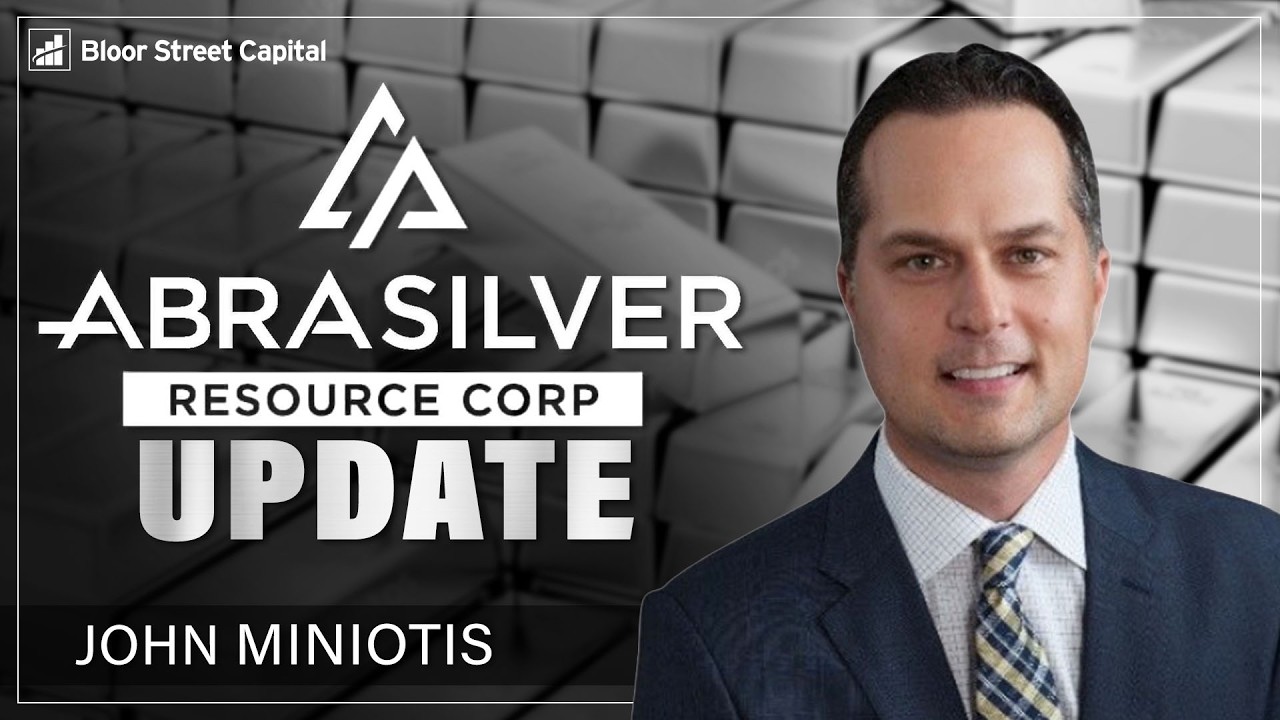
AbraSilver Diablillos DFS: $4.2B NPV, RIGI Approval, and a 2027 Construction Decision
The Diablillos DFS shows a $4.2B CAD after-tax NPV at a conservative $50/oz silver, with a 40%+ IRR, a 1.7-year payback, and ~$20/oz AISC. With full provincial permits, federal RIGI approval, and $70M cash from a recently closed $50M raise, AbraSilver is targeting an April 2027 construction decision and first production before end of 2029.
Investor angle
At $50/oz silver (well below current spot), the Diablillos DFS shows $4.2B CAD after-tax NPV, 40%+ IRR, 1.7-year payback, and ~$20/oz AISC on a fully permitted, RIGI-approved primary silver project. With $70M cash from an oversubscribed raise and a $720M capex package in the works, the next 6–12 months — financing announcement, resource update, and April 2027 construction decision — are the catalysts that matter for the re-rating thesis.
## DFS economics, anchored below spot
The definitive feasibility study (DFS) for Diablillos — AbraSilver's flagship silver-gold project in Argentina's Salta and Catamarca provinces — values the project at a $4.2 billion CAD after-tax NPV at a 5% discount rate, with an after-tax IRR above 40%. According to John Miniotis on the Jimmy Connor channel, the headline figures were run at $50/oz silver and $3,650/oz gold long-term, well below current spot, which means the project carries significant built-in leverage to higher prices.
The base case supports a 25-year mine life at 9,000 tonnes per day, with payback inside two years (1.7 years at base case). Initial capex is $720 million USD, and first production is targeted before the end of 2029. All-in sustaining costs (AISC — what it really costs to produce an ounce) land around $20/oz, which Miniotis argues places Diablillos among the lowest-cost primary silver operations globally.
## A two-metal stream, dominated by silver
The host and guest work through the production profile. In peak years (years 2 and 3), Diablillos would produce roughly 19 million ounces of silver in year 2 and 17 million ounces of silver in year 3, with gold as a meaningful byproduct on top. Across the life of mine, silver accounts for roughly two-thirds of revenue and gold for the remaining third.
The standout claim: in year three, on silver alone, the project would surpass San Cristobal in Bolivia (~17 million ounces) and rank as the largest primary silver mine globally by silver ounces, he argues — a positioning claim that, if the DFS holds, would reframe the company inside the global silver universe.
## Permits, RIGI, and a transformed Argentine jurisdiction
Beyond the economics, the regulatory picture is now complete. Provincial environmental approvals came in from Salta in April and Catamarca in June. At the federal level, AbraSilver has received RIGI approval — Argentina's large-scale investment incentive regime, which locks in a stable fiscal framework for 30 years, removes export and import duties, and lifts foreign exchange restrictions.
According to the guest, AbraSilver is the only mid-cap developer in Argentina with RIGI approval. The other RIGI-approved operators named in the conversation are majors — Newmont, Barrick, Glencore, Rio Tinto, and BHP. That's a meaningful differentiator for a $720M capex project that depends on predictable fiscal terms.
## A $50M bridge to the project financing package
The recently closed $50 million equity raise at $1,470 per share was oversubscribed and capped at that level. Existing institutional shareholders anchored the deal: Helicon, a London-based fund and the top shareholder at over 10%, participated, as did Kinross, which elected to maintain its 4% stake pro rata. The guest notes dilution came in at under 2% of shares outstanding.
The raise lifted the cash position from about $20M to $70M. Miniotis frames it as a bridge — enough to fund detailed engineering, early construction activities, and long-lead-time orders while management works on the larger project financing package. The company is weighing term debt, a silver or gold stream, and additional equity, with details targeted for announcement by year-end.
## Team and timeline toward a 2027 construction decision
The construction decision is set for April 2027. Between now and then, the company is finalizing detailed engineering and building out the technical and corporate team. Jeremy Whalen, who led the DFS technical work, has been promoted to COO. Marie Inkster — formerly CFO and CEO of Lundin Mining for roughly a decade — has stepped in as executive chair, a credibility hire for a company transitioning from explorer to developer.
## Exploration hasn't stopped
Unusually for a DFS-stage asset, drilling is still running step-out holes. The Phase 6 program, focused on Oculto West and Oculto East, returned a July highlight of over 100 metres at 220 g/t silver and 0.7 g/t gold. The resource is scheduled for an update next year, and exploration upside feeds directly into the expansion scenarios management is studying — adding plant throughput and a heap leach circuit, both framed as phase 2 optionality within the current DFS.
## What to watch
The pipeline through year-end includes: a larger financing package announcement, ongoing exploration results, technical team hires in Argentina, and progress toward the April 2027 construction decision. Miniotis's framing — that AbraSilver should re-rate from an explorer multiple to a developer multiple as construction nears — is the implicit pitch to investors watching the stock's 45% year-to-date move.
Generated by Pixys from the source video below. Not investment advice.